Can Cats Eat Blueberries? How Many Are Safe
Last updated: November 25, 2026. Sources are listed at the bottom.
Veterinary reviewed by Dr Zahid Iqbal, DVM, MRCVS and Dr Fatih Bozbay, Veterinarian.
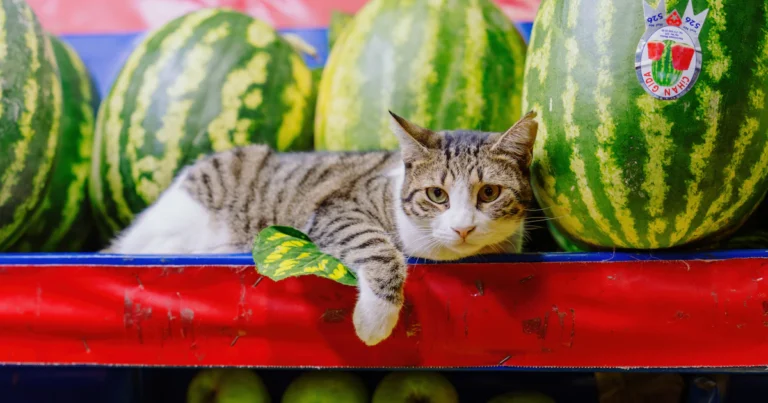
Photo by Joanna Kosinska on Unsplash
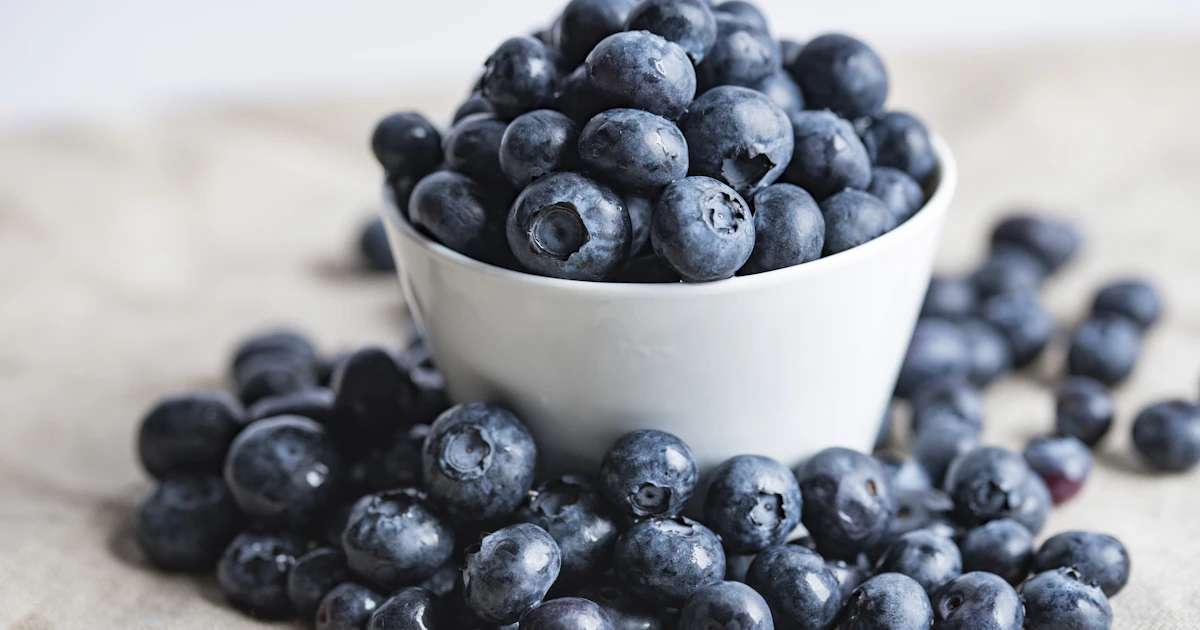
Blueberries are not toxic to cats, and some cats enjoy batting them around. They are still a treat, because cats get what they need from meat-based cat food.
Here is how to offer them safely.
Short answer: yes, a few at a time.
Fresh, plain blueberries are safe for most cats in small quantities. Skip them for diabetic cats, and never give muffins or sweetened dried berries.
Are blueberries safe for cats?
PetMD says blueberries are safe for most cats in small quantities, with a few risks. Cats lack sweet taste receptors, but the sugar can still raise blood sugar, which matters for cats with diabetes. Whole berries can also be a choking hazard for small cats and kittens.
How many blueberries can a cat eat?
Hill’s Pet quotes veterinarian Dr. Karen Louis: for most adult cats, two or three blueberries a day is fine. Many owners will want to start with just one and offer them only occasionally. HowStuffWorks gives two to three as a maximum. Treat that as the ceiling, not a target, and keep all treats within the 10 percent rule.
Who should skip blueberries?
- Cats with diabetes (sugar can affect blood glucose).
- Overweight cats.
- Cats with sensitive stomachs, since too many can cause loose stool.
Fresh, dried, or in baked goods?
Stick to fresh. Hill’s Pet warns that dried and canned blueberries can have added sugar. PetMD says cats should not eat blueberry muffins because they are high in sugar.
How to serve
Wash the berries, offer one, and for small cats or kittens cut or lightly mash it to lower choking risk. Watch for vomiting or diarrhea.
Choking and how to cut them
A whole blueberry is round and easy to gulp. PetMD warns it can lodge in the windpipe or throat of small cats and kittens. Cutting each berry in half, or mashing it as Hepper suggests, removes the problem.
Frozen blueberries: sources disagree
PetMD says frozen pieces can be a cooling snack as long as they are not served whole. Chewy, Petco and Basepaws warn that hard frozen berries can hurt teeth and add to the choking risk, and suggest fresh or thawed instead. Since there is no clear winner, thawed and halved is the safer choice.
Are the antioxidants worth it?
Blueberries are rich in antioxidants for people, but Basepaws notes cats usually get enough from a complete diet, and another cat-food site says they offer no significant benefit to an obligate carnivore. Think of blueberries as a harmless extra, not a health supplement.
Muffins, dried and canned berries
Plain fresh fruit only. Muffins and baked goods bring sugar, fat and sometimes raisins or chocolate, while dried and canned berries are concentrated in sugar.
Blueberries versus a cat’s real diet
Cats are obligate carnivores, so their key nutrients come from animal protein, not fruit. Blueberries add some antioxidants and fiber, but a cat on a complete cat food does not need them. Treat them as a small extra, and keep all treats together to roughly 10 percent of daily calories.
Why many cats ignore blueberries
Cats lack the receptors that taste sugar, so a sweet berry often does not excite them the way it excites people. A cat that sniffs one and walks away is perfectly normal, and there is no reason to push it.
Blueberry products to leave out
Plain berries are the only form worth sharing. Muffins, pastries and sweetened snacks can carry ingredients such as chocolate or xylitol that are dangerous for cats, so keep those out of reach even if the label says blueberry.
What the research actually says
Catster’s vet answer admits there are no specific scientific studies proving blueberries benefit cats. It points to research on antioxidants in general, which suggests dietary antioxidants can support a cat’s immune system, and notes that blueberries are high in them. Another Catster guide says blueberries are not a superfood for cats the way they are thought to be for humans, though they may help neutralize free radicals. So the benefit is plausible, not proven.
Why portion advice differs: 2 percent to 10 percent
The sources do not agree on how much. PetMD says up to three blueberries at once, no more than a few times a week. Catster’s vet answer says a few a day is fine, while Hepper says two or three berries and not daily. Hepper’s muffin guide goes lowest, suggesting fruit should be about 2 percent of the diet. Everyone agrees on the outer limit that all treats together stay under 10 percent of the diet, so the cautious end of the range is the safer starting point.
Vitamins and eye nutrients
PetMD says blueberries contain vitamins C, K and E along with flavonoids and fiber. Hepper adds choline, lutein and zeaxanthin, and says lutein and zeaxanthin protect eye structures. These nutrients are real, but a cat on complete cat food already gets what it needs, so the amounts from a few berries are small.
Frequently asked questions
Can kittens eat blueberries?
PetMD says yes in small amounts of fresh, plain blueberries, but their stomachs are more sensitive, so limit the serving and watch closely.
Can cats eat blueberry muffins?
No. They are high in sugar, and some contain other ingredients that are unsafe.
Are blueberries good for cats?
They contain antioxidants and fiber, but cats do not need fruit. Treat them as an occasional extra.
Can diabetic cats eat blueberries?
It is best to avoid them unless your vet says otherwise.
Why does my cat like blueberries?
Cats.com suggests the water content and novelty can appeal. Many cats ignore them completely.
Can cats eat other berries?
Some, yes. Blackberries and raspberries are generally treated as safe in small amounts, while grapes and raisins are toxic and must be avoided completely. When unsure about a berry, leave it out.
Can cats have blueberry extract or supplements?
There is no standard safe dose because extract strength varies a lot between products. Ask your own vet before giving any blueberry supplement.
PawFoodCheck is not a veterinary service. This article is general information and does not replace advice from your own veterinarian.
Are blueberries really in cat food?
Yes. Hepper says blueberry extract is commonly used as an ingredient in cat foods, and its basil guide notes that some labels list blueberries even though cats are obligate carnivores. The fruit in a formula is a minor ingredient in a complete diet, which is different from a cat eating a handful.
Do blueberries help a cat lose weight?
Hepper says the fiber and water in blueberries keep the stomach fuller for longer, which may help when trying to slim a cat down. PetMD adds that they are low in calories, but also warns that overweight or diabetic cats should be checked with a vet first. Treat this as a small helper, not a diet plan.
Can cats taste blueberries?
Not the sweetness. Hepper says cats cannot taste the fruit flavor and may be drawn to the moist texture instead, and Hepper’s muffin guide cites a 2006 study that cats lack sweet taste receptors.
Related guides
References
- PetMD: Can Cats Eat Blueberries?
- Hill’s Pet: Can Cats Eat Blueberries?
- Chewy: Can Cats Eat Blueberries?
- PetMD: Can Cats Eat Blueberries?
- Hill’s Pet: Can Cats Eat Blueberries?
- Chewy: Can Cats Eat Blueberries?
- Petco: Can Cats Eat Blueberries?
- Hill’s Pet: Can Cats Have Blueberries?
- PetMD: Can Cats Eat Blueberries?
- WebVet: Can Cats Eat Blueberries?
- PetMD: Can Cats Eat Blueberries?
- Catster: Can Cats Eat Blueberries? Our Vet Answers
- Hepper: Can Cats Eat Blueberries?
- Hepper: Can Cats Eat Blueberry Muffins?
- Catster: 16 Fruits & Vegetables That Cats Can Eat
Quick reference: see our Cat Food Safety Chart for a one-page list of toxic and usually safe foods for cats.