Can Cats Eat Watermelon? What Is Safe and What Is Not
Last updated: November 25, 2026. Sources are listed at the bottom.
Veterinary reviewed by Dr Zahid Iqbal, DVM, MRCVS and Dr Fatih Bozbay, Veterinarian.
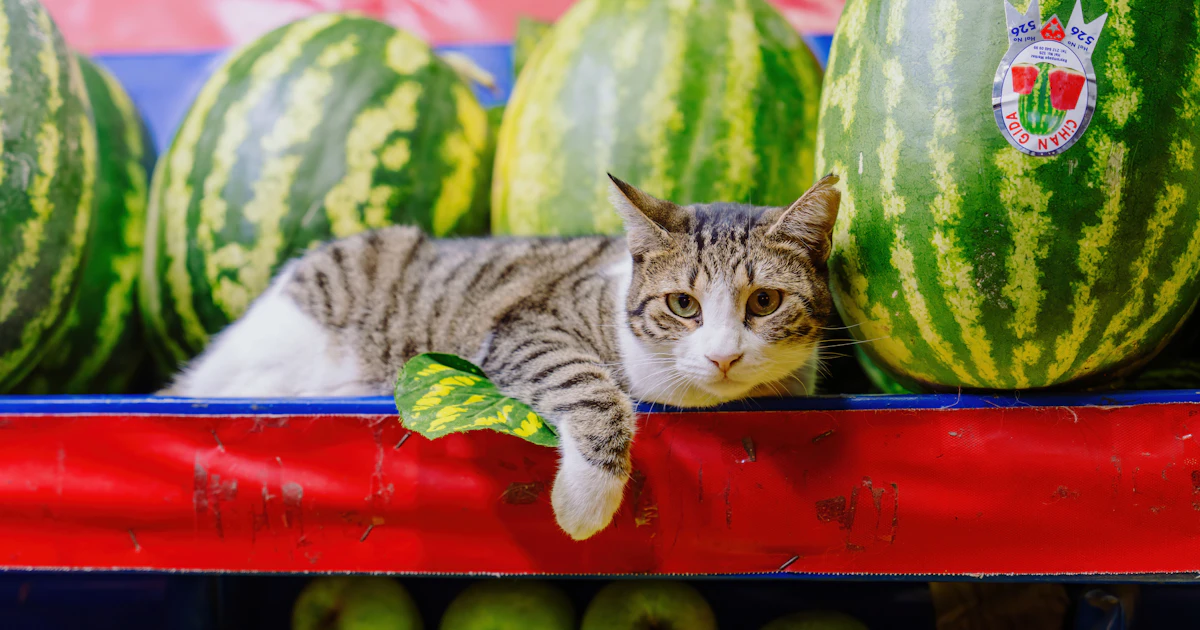
Photo by Pourya Gohari on Unsplash
If your cat is eyeing your slice of watermelon, a tiny piece of the red flesh is fine. The parts that cause trouble are the seeds and the rind, so most of this guide is about preparing it safely.
Watermelon is also not something your cat needs. Cats are meat eaters, and PetMD notes that many cats show little interest in it and may prefer a protein-rich treat.
Short answer: yes, in small amounts.
Plain seedless watermelon flesh is generally safe as an occasional treat for healthy cats. Remove every seed and all of the rind first.
Which parts of watermelon are safe for cats?
- Flesh: okay in small amounts, served plain.
- Seeds: no. They are a choking risk, and Hill’s Pet notes they contain amygdalin, which can release cyanide when chewed.
- Rind: no. It is tough and hard to digest, and can cause stomach upset or, in severe cases, an intestinal blockage.
How much watermelon can a cat have?
Think very small. Hill’s Pet suggests fresh, seedless watermelon cut into bite-sized pieces about the size of a pea, and PetMD says it should only be offered occasionally in small portions. It is a treat, not part of a meal.
How to serve it safely
- Choose ripe, fresh, seedless watermelon.
- Cut away all of the rind.
- Check for any stray seeds.
- Offer one or two pea-sized pieces and watch for vomiting or diarrhea over the next day.
Skip watermelon candy, sugary juice, or anything flavored. Those are not the same as plain fruit.
What if my cat ate seeds or rind?
Take the watermelon away. If your cat swallowed rind pieces or several seeds, or you see repeated vomiting, a painful belly, no appetite or no stool, call your vet. If you are unsure, our emergency guide lists what to do next.
How much watermelon is a sensible portion?
There is no single official serving. Hill’s Pet suggests about 1 tablespoon for a cat over 12 lb, cut into pea-sized pieces. Catster suggests roughly the size of a pair of dice, and notes that a typical 10 lb adult cat needs about 262 calories a day, so a treat allowance is only around 26 calories. Chewy’s vet source points to the 10 percent rule: treats of every kind together should stay under a tenth of daily calories.
Seeds and rind: where sources agree and differ
Everyone agrees the rind goes in the bin: it is tough, hard to digest and can be a choking or blockage risk. Seeds are less clear-cut. Purina, Chewy and PetMD say they contain trace cyanide and are a choking hazard, while WebVet makes the point that a few swallowed seeds do not automatically mean an obstruction. The practical answer is the same either way: choose seedless melon or pick every seed out before serving.
Does watermelon really hydrate a cat?
It is about 92 percent water, but that does not make it a hydration tool. Chewy’s vet source says it can help on a hot day yet should never replace the water bowl, and WebVet cautions that a household taste is not a feline fluid plan. If your cat does enjoy it, a few frozen seedless cubes are a low-effort way to make a small amount last longer.
Cats that should skip watermelon
The sugar matters most for diabetic and overweight cats, and Catster advises against any extra human food for cats on a prescription diet. A cat that gets loose stools after a taste is telling you it is not for them.
Serving size: sources differ
Suggestions range from a single 1-inch cube to a couple of bite-sized chunks or the size of a pair of dice. All agree it should be a small, occasional treat counted inside the 10% treat limit, and that obese or diabetic cats should skip it.
Is the hydration benefit real?
Watermelon is mostly water, so it adds a little moisture, but it is not a fix for a cat that drinks too little. A wet cat food and fresh water do far more than a cube of fruit.
Frozen pieces on hot days
Some owners offer a few frozen seedless pieces as a cooling treat. Keep them small enough to avoid choking, and offer them only occasionally.
Frequently asked questions
Can kittens eat watermelon?
Advice differs. Hill’s Pet says to avoid it for kittens, while PetMD says healthy kittens can have very small amounts occasionally with little nutritional benefit. Because kittens have sensitive stomachs, ask your vet first.
Can cats eat watermelon seeds?
No. Seeds are a choking risk and contain trace amounts of cyanide-releasing compounds, so remove them.
Can cats eat watermelon rind?
No. The rind is hard to digest and may cause choking or a blockage.
Is watermelon good for cats?
It is not harmful in tiny amounts, but it offers limited nutrition for a meat-eating animal.
Why does my cat like watermelon?
Cats cannot taste much sweetness, so Chewy’s vet source suggests the pull is probably the moisture and soft texture, not the flavor.
Can cats eat frozen watermelon?
Yes, as small seedless cubes in very small amounts. Frozen pieces last longer and make a cooling treat in hot weather.
Can diabetic cats eat watermelon?
It is best avoided because of its natural sugar. Fruit contains sugar, so ask your vet before offering any to a diabetic or overweight cat.
Is watermelon good for cat hydration?
It adds a little water but is no substitute for water and wet food.
PawFoodCheck is not a veterinary service. This article is general information and does not replace advice from your own veterinarian.
Related guides
References
- PetMD: Can Cats Eat Watermelon?
- Hill’s Pet: Can Cats Eat Watermelon?
- Purina: Can Cats Eat Watermelon?
- Hill’s Pet: Can Cats Eat Watermelon?
- PetMD: Can Cats Eat Watermelon?
- Chewy: Can Cats Eat Watermelon?
- Catster: Can Cats Eat Watermelon?
- WebVet: Can Cats Eat Watermelon?
- Purina: Can Cats Eat Watermelon?
- PetMD: Can Cats Eat Watermelon?
- Catster: Can Cats Eat Watermelon?