Can Dogs Eat Cottage Cheese? Which Kind & How Much (2026)
Last updated: November 25, 2026 · Sources are listed at the bottom. How we research
Veterinary reviewed by Dr Zahid Iqbal, DVM, MRCVS and Dr Fatih Bozbay, Veterinarian.
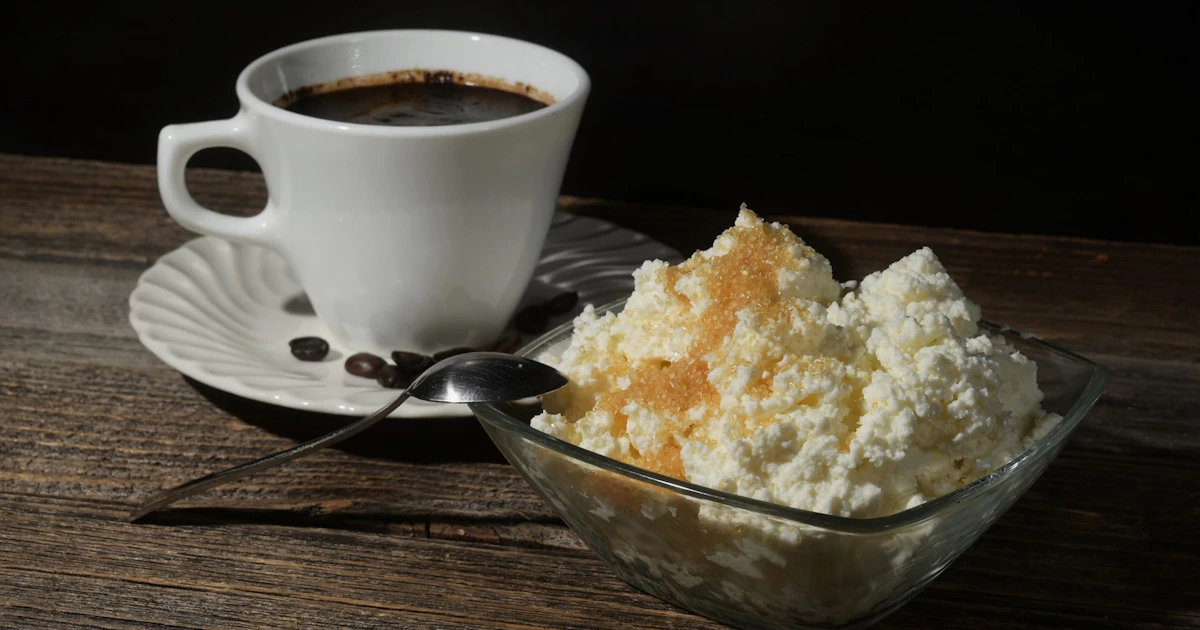
Photo by Gennady Zakharin on Unsplash
Cottage cheese is a common diet food and breakfast side, and it is one of the milder dairy foods a dog might get a spoonful of. Most dogs can eat plain, low-fat cottage cheese in small amounts as an occasional treat, as long as the tub has no flavors, chives, onion, garlic or sweeteners.
Below you will find which kind of cottage cheese is best, how much a dog can have and whether it is actually good for dogs.
Quick answer: Yes, most dogs can eat plain, low-fat cottage cheese in small amounts as an occasional treat. Choose a plain tub with no flavors, chives, onion, garlic or sweeteners, keep all treats under 10% of your dog’s daily calories, and start with a teaspoon to see how your dog reacts. Skip it if your dog has had pancreatitis, has kidney or heart disease, eats a prescription diet, or gets an upset stomach from dairy.
- Best choices: plain low-fat (1% or 2%) or nonfat cottage cheese, ideally lower sodium
- Fine, with label checks: dry curd, lactose-free plain cottage cheese
- Rarely: full-fat or whipped cottage cheese
- Never: any tub with chives, onion, garlic, herbs, fruit, added sugar or sweeteners such as xylitol
Jump to: Which kind · How much · Upset stomach · Who should skip it · Ate too much · FAQ
Is cottage cheese safe for dogs?
Plain cottage cheese is not a toxin for dogs, so the real questions are which tub and how much. It is one of the gentler cheeses: the USDA entry for 2% cottage cheese lists about 81 kcal and 2.3 g of fat per 100 g, compared with about 403 kcal per 100 g for cheddar. That is roughly one fifth of the calories. Three things still need care: sodium, lactose and calories.
Sodium. Plain does not always mean low salt. USDA entries for cottage cheese range from about 300 mg to more than 400 mg of sodium per 100 g, and brands differ. Vet-reviewed guides flag sodium as a concern for dogs with kidney or heart disease.
Lactose. Cottage cheese is a fresh cheese, so it keeps more lactose than aged cheddar: roughly 3 to 4 g per 100 g in USDA-based data, against about 5 g in milk. It is lower than milk, but it is not lactose-free, so a dairy-sensitive dog can still get gas, loose stools or vomiting. Offer a teaspoon the first time and watch your dog for a day.
Calories and fat. A few spoons are fine, but a full bowl adds up fast, and sudden fatty treats can trigger pancreatitis in dogs prone to it.
Which kind of cottage cheese is best for dogs?
The tub matters more than the cheese. Flip it over and read the ingredients before you scoop.

Read this as a ceiling, not a target. It is the most that fits in a day if cottage cheese is your dog’s only treat, and biscuits, chews and training treats share the same budget. Real servings are much smaller. One vet-reviewed guide, for example, suggests roughly 1 to 2 tablespoons, once or twice a week, for a 21 to 50 lb dog. Another points out that no evidence-based fixed spoon size exists, which is why the label calories matter.
Using a different tub? Work it out yourself: treat budget in kcal ÷ (kcal per 100 g ÷ 100) = grams per day at most. For example, a 21 kcal budget allows about 29 g of a tub with 72 kcal per 100 g. A lower-calorie tub is not automatically lower in sodium, so check both numbers. Active, underweight or overweight dogs need different numbers, and dogs with health conditions may need none, so ask your vet.
| Type | Verdict | What to know |
|---|---|---|
| Plain, low-fat (1% or 2%) | Best choice | About 70 to 80 kcal per 100 g in USDA data. Compare the sodium on different brands and pick the lowest. |
| Low sodium or no salt added | Best choice | Same idea with less salt. Useful if your vet has told you to watch sodium. |
| Nonfat (fat-free) | Fine | Lowest in fat. Check the label for added ingredients. |
| Dry curd | Fine | Drier and leaner. Some dry curd is salted, so check the label. |
| Lactose-free (plain) | Fine | May suit dairy-sensitive dogs, but apply the same label rules. |
| Full-fat | Rarely | More fat in every spoon. Not for dogs prone to pancreatitis or on weight plans. |
| Whipped or savoury styles | Avoid | Often carry extra salt. |
| With fruit | Avoid | Added sugar. Never choose any tub with grapes or raisins, which are toxic to dogs. |
| With chives, onion, garlic or herbs | Never | Onion, garlic and chives are toxic to dogs. |
| Sweetened or flavored | Never | Some sweeteners, especially xylitol, are highly toxic to dogs. Always read the label. |
How much cottage cheese can a dog eat?
The usual vet rule is that all treats together, cottage cheese included, stay under 10% of your dog’s daily calories. We turned that rule into a ceiling by dog weight, the same way as in our cheese guide. We estimated a typical neutered adult dog’s daily need as 1.6 × resting energy requirement (70 × body weight in kg to the power 0.75), took 10% of it, and divided by the 81 kcal per 100 g of 2% cottage cheese.
| Dog weight | Daily calories (est.) | Treat budget (10%) | Daily ceiling of 2% cottage cheese |
|---|---|---|---|
| 5 lb (2.3 kg) | ~207 | ~21 kcal | 25 g (about 2 tbsp) |
| 10 lb (4.5 kg) | ~348 | ~35 kcal | 43 g (about 3 tbsp) |
| 20 lb (9.1 kg) | ~585 | ~59 kcal | 71 g (about 5 tbsp) |
| 35 lb (15.9 kg) | ~891 | ~89 kcal | 109 g (about 8 tbsp) |
| 50 lb (22.7 kg) | ~1,164 | ~116 kcal | 142 g (about 10 tbsp) |
| 75 lb (34 kg) | ~1,578 | ~158 kcal | 192 g (about 14 tbsp) |
| 100 lb (45 kg) | ~1,958 | ~196 kcal | 239 g (about 17 tbsp) |
Is cottage cheese good for dogs?
Cottage cheese gives protein (about 10 g per 100 g in the USDA entry for 2%) and some calcium (about 111 mg per 100 g). A complete dog food already supplies what your dog needs, so think of cottage cheese as a tasty extra, not nutrition your dog is missing. Many dogs find it very appealing, which makes it useful for training, as a topper in a small amount, or for a dog that needs encouragement to eat.
Is cottage cheese good for a dog with an upset stomach?
You will often see cottage cheese and plain rice recommended for dogs with a mild stomach upset. Vets do sometimes include plain low-fat cottage cheese in a short bland diet, but it is not a cure and it is not a complete diet. In dairy-sensitive dogs it can make loose stools worse. Do not improvise a long homemade diet. For mild cases, bland diets are normally used for a day or two, and longer use needs your vet’s approval.
Call your vet if vomiting or diarrhea repeats or lasts more than a day, if your dog seems in pain or very tired, refuses food, or is a puppy, a small dog or an older dog. Do not give another dairy product to settle the stomach.
Which dogs should skip cottage cheese
- Dogs that have had pancreatitis, or that are on a fat-restricted diet.
- Dogs with kidney or heart disease, or any condition that needs low sodium. Your vet should set the limits.
- Dogs on a prescription or weight-loss diet. Do not add treats unless your vet says so.
- Dogs with a known or suspected dairy allergy. This is different from lactose intolerance. Itchy skin, ear problems or stomach upset after dairy are reasons to avoid it.
- Puppies. A very small amount may be fine, but their stomachs are sensitive, so ask your vet first.
My dog ate too much cottage cheese. What now?
Large amount of plain cottage cheese. Expect possible gas, vomiting or diarrhea. Offer water, skip other rich food, and watch your dog for the next day. Call your vet if vomiting repeats, if your dog is in pain, very tired or refuses food, or if the amount was large for a small dog.
A tub with chives, onion, garlic, xylitol or grapes and raisins. Call your vet or a poison line straight away, without waiting for symptoms. In the US: ASPCA Animal Poison Control Center (888) 426-4435 or Pet Poison Helpline (855) 764-7661 (a consultation fee may apply). Keep the tub so you can give the exact ingredients, and have your dog’s weight, the amount and the time ready.
Go to an emergency vet for tremors, weakness, trouble breathing or swallowing, collapse, or if your dog cannot pass urine or stool.
Using cottage cheese to hide a pill? Ask your vet or pharmacist first, because the calcium in dairy can affect how some medicines are absorbed.
Cottage cheese compared with other cheeses
Cottage cheese is among the better cheeses for dogs because of its lower fat and calories, but it is a fresh cheese with lactose and sometimes a lot of sodium. For how it compares with mozzarella, cheddar, blue cheese and the rest, read Can Dogs Eat Cheese? or browse our Dairy section.
Frequently asked questions
Can dogs eat cottage cheese every day?
It is not recommended. Daily servings add calories, sodium and lactose and can crowd out balanced food. Keep it to once or twice a week inside the 10% treat budget, unless your vet says otherwise.
Can dogs eat low-fat cottage cheese?
Yes. Plain low-fat (1% or 2%) or nonfat cottage cheese is the best choice, in small amounts. Check the sodium on the label.
Can dogs eat cottage cheese with fruit?
It is better to avoid it because of the added sugar. Never choose a tub with grapes or raisins, which are toxic to dogs.
Can dogs eat cottage cheese with pineapple?
Yes, in small amounts, if both are plain. Fresh pineapple (without the skin and core) is a safe occasional fruit for dogs, and plain cottage cheese is fine as a small treat. Avoid canned pineapple in syrup, which adds a lot of sugar, and keep the portion small, since both foods carry calories and pineapple is acidic and can upset some stomachs.
Can dogs eat cottage cheese with peaches?
Yes, in small amounts. Offer a few pieces of fresh peach flesh with the cottage cheese. Never give the pit, which is a choking hazard and contains compounds that can be harmful, and skip canned peaches in syrup. If your dog has never had peach, start with one small piece.
Can dogs eat cottage cheese with chives?
No. Chives, onion and garlic are toxic to dogs. Call your vet or a poison line if your dog ate some.
Is cottage cheese high in sodium for dogs?
It can be. USDA entries range from about 300 to more than 400 mg per 100 g, so compare brands and choose the lowest. Dogs with kidney or heart disease should only have it if their vet agrees.
Can puppies eat cottage cheese?
A tiny amount is usually fine for a healthy puppy, but their digestion is sensitive, so ask your vet first and start with a very small taste.
Can dogs eat cottage cheese and rice?
A small amount of plain low-fat cottage cheese with plain cooked rice is sometimes part of a short, vet-guided bland diet for a mild stomach upset. Check with your vet first, and call them if symptoms last more than a day.
Is cottage cheese or cheese better for dogs?
Plain low-fat cottage cheese has fewer calories and less fat than most hard cheeses, but it keeps more lactose and can be higher in sodium than you expect. Either is a small occasional treat.
The bottom line
Plain, low-fat cottage cheese is a safe occasional treat for most healthy dogs. Read the label for sodium and hidden onion, garlic, fruit or sweeteners, keep treats under 10% of daily calories, and ask your vet first if your dog has pancreatitis, kidney or heart disease, a dairy allergy or a prescription diet.
This article is general information and does not replace advice from your own veterinarian. I am not a veterinarian. See our disclaimer.
Related guides
- Can dogs eat ice cream?
- Can dogs eat cheese curds, Manchego & specialty cheeses?
- Can dogs eat yogurt?
- Can dogs eat Muenster cheese?
References
- Chewy: Can Dogs Have Cottage Cheese? (verdict, label advice, risks, sodium, serving ranges; reviewed by a DVM)
- WebVet: Can Dogs Eat Cottage Cheese? (label calories, 10% treat allowance, pancreatitis and sodium cautions, bland diet cautions, red flags)
- PetPlace: Bland Diet for Dogs (typical bland diet length)
- Blue Cross: Bland diet for dogs and cats (speak to your vet first)
- USDA FoodData Central, FDC IDs 172182 (cottage cheese, lowfat 2% milkfat) and 173417 (lowfat 1% milkfat); cheddar values are standard USDA figures