Can Dogs Eat Sausage? Fat, Salt & Garlic Risks (2026)
Last updated: November 25, 2026
Veterinary reviewed by Dr Zahid Iqbal, DVM, MRCVS and Dr Fatih Bozbay, Veterinarian.
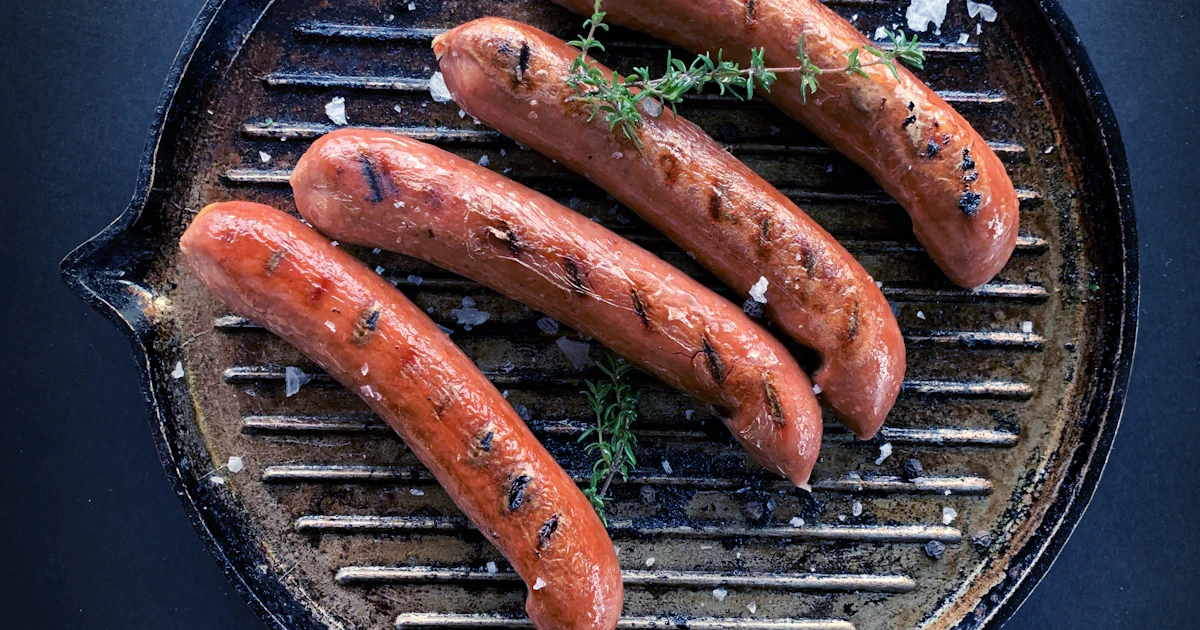
Photo by LikeMeat on Unsplash
Sausage turns up at breakfast, on the grill and in pasta, and a dog nearby will happily take a piece. It is best avoided. Sausage is not toxic in itself, but it is high in fat and salt, and many recipes are seasoned with garlic or onion, which are harmful to dogs.
Below you will find the risks, how different sausage types compare and what to do if your dog ate some.
Quick answer: It is best avoided. Sausage is not toxic in itself, but it is high in fat and salt, and many recipes are seasoned with garlic or onion, which are harmful to dogs. A small plain piece is unlikely to hurt a healthy dog. Raw sausage should never be fed.
On this page
Can dogs have sausage?
Sausage is minced meat mixed with fat, salt and seasoning. Each of those additions is a reason to keep it away from dogs. The fat content is high, the sodium is high, and the seasoning blend very often includes garlic powder or onion powder. Breakfast links, Italian sausage, bratwurst, chorizo and pepperoni all share the same problems to different degrees.
If your dog stole a bite of cooked sausage, the most likely outcome is nothing, or a mild stomach upset. The concern grows with the amount, the size of the dog and the ingredients. For a meaty treat you can feel good about, plain cooked pork, chicken or turkey is a far better choice.
Risks to know
- Fat. Fatty foods can cause vomiting and diarrhea, and they are a known trigger for pancreatitis in dogs that are prone to it.
- Salt. Sausage is heavily salted. Too much causes thirst and stomach upset, and it is a bigger concern for small dogs and dogs with heart or kidney disease.
- Garlic and onion. Both are common in sausage seasoning and can damage a dog’s red blood cells. See can dogs eat garlic and can dogs eat onions.
- Raw sausage. Raw meat can carry bacteria and parasites. Do not feed raw sausage or sausage meat.
- Spices and casings. Chilli, paprika and nutmeg can upset the stomach, and tough casings can be a choking risk.
Sausage types compared
| Form | Verdict | Why |
|---|---|---|
| Plain cooked sausage, small piece | Unlikely to harm | Still fatty and salty. Check for garlic and onion. |
| Breakfast sausage | Avoid | High in fat and salt, with sage and pepper. |
| Italian sausage | No | Usually contains garlic and fennel, and sometimes chilli. |
| Bratwurst | Avoid | Fatty, salty, and often seasoned with onion or garlic. |
| Chorizo and pepperoni | No | Very fatty, salty and spicy. |
| Raw sausage | No | Bacteria and parasite risk. |
| Chicken or turkey sausage | Avoid | Leaner, but still salty and seasoned. |
| Plain cooked lean meat | Better choice | No added salt, fat or seasoning. |
My dog ate sausage. What should I do?
- Work out what kind it was, how much your dog ate, and whether the ingredients include garlic or onion.
- A small piece of cooked sausage is unlikely to harm a healthy dog. Offer fresh water and watch for vomiting or diarrhea.
- Call your vet if your dog ate a large amount, ate raw sausage, is a small dog, or has had pancreatitis before.
- Call your vet promptly for repeated vomiting, a painful or swollen belly, weakness or pale gums.
Fat, salt and pancreatitis
PetMD says sausage is high in fat and sodium compared with plain chicken or ground beef, and that too much of either can lead to serious health conditions such as pancreatitis. Hepper says sausage is typically loaded with salt, and that excess salt may also cause digestive signs. The AKC lists fatty cookout foods such as hot dogs and burgers among foods that can cause pancreatitis.
Garlic and onion in sausage seasoning
PetMD says sausage is made of ground meat, fat and spices, including garlic, which is dangerous for dogs, and that it often has onion or spicy additives that should always be avoided. Hepper says never to give sausage containing garlic, onions or any spices. Since the seasoning is mixed through the meat, there is no way to pick it out.
Hot dogs: the sodium numbers
The AKC and PetMD both say a 33 pound dog needs only about 200 mg of sodium a day, while the average hot dog has over 500 mg, so even half a hot dog could put a dog over the limit. Both note nitrates, MSG and artificial sweeteners in many hot dogs. Chewy says a plain, low-sodium, cut-up piece of lean chicken or turkey hot dog is an occasional option, but that is a much smaller allowance than a normal serving.
Bratwurst, kielbasa and Vienna sausage
PetMD says all forms of sausage are no-gos, including breakfast, Vienna, links, patties and crumbles, and says bratwurst has added onion or garlic and high fat. Hepper’s kielbasa guide says a two-ounce serving of kielbasa has more fat than a 33 pound dog needs in a day and almost triple the daily sodium, and that garlic is a common ingredient.
A small bite: sources disagree
PetMD says dogs should not eat sausage at all. Hepper says a small piece of cooked sausage now and then will not harm a dog, but it is not a healthy snack and should never be overdone. Either way, if the sausage contains garlic or onion, it is not a safe bite.
FAQ
Is sausage bad for dogs?
It is not toxic, but it is a poor choice. Sausage is high in fat and salt and is often seasoned with garlic or onion.
Can dogs eat cooked sausage?
A small plain piece is unlikely to harm a healthy dog, but it should not be a regular treat.
Can dogs eat raw sausage?
No. Raw sausage can carry harmful bacteria and parasites, and it has all the fat, salt and seasoning of cooked sausage.
Can dogs eat breakfast sausage?
It is best avoided. Breakfast sausage is one of the fattier, saltier kinds.
Can dogs eat Italian sausage?
No. It usually contains garlic, and often chilli.
Can dogs eat sausage casing?
It is not toxic, but tough or artificial casings can be a choking or blockage risk, so do not offer them.
Can puppies eat sausage?
No. Puppies are small and have sensitive stomachs, so the fat, salt and seasoning are a bigger problem for them.
What can I give instead of sausage?
Small pieces of plain cooked lean meat such as chicken, turkey or lean beef, with no salt or seasoning.
Can dogs eat hot dogs?
The AKC and PetMD say hot dogs are not recommended because of sodium, nitrates and seasonings, and Chewy says a small piece of plain lean one is an occasional treat at most.
Can dogs eat bratwurst?
PetMD says no. Bratwurst contains onion or garlic and is high in fat.
Can dogs eat kielbasa?
Hepper says kielbasa is high in fat and sodium and often contains garlic, so it is best avoided.
How much sodium is in a hot dog compared to what a dog needs?
The AKC says the average hot dog contains more than 500 mg of sodium, while a 33 pound dog needs only about 200 mg a day.
Bottom line
Sausage is fatty, salty and often seasoned with garlic or onion, so it is not a food to share with dogs. A stolen bite of cooked sausage is rarely serious for a healthy dog. Plain cooked lean meat is the better treat.
I’m not a veterinarian. This article is general information and does not replace advice from your vet, especially for dogs with diabetes or digestive problems.
Related guides
References
- American Kennel Club, can dogs eat sausage
- ASPCA Animal Poison Control, people foods to avoid feeding your pets (onion, garlic and salt)
- Merck Veterinary Manual, pancreatitis in dogs
- PetMD, Can Dogs Eat Sausage? (fat, sodium, garlic, bratwurst)
- Hepper, Can Dogs Eat Sausage? (small piece, salt)
- AKC, Can Dogs Eat Hot Dogs? (sodium, nitrates)
- Hepper, Can Dogs Eat Kielbasa? (fat and sodium numbers)
- Chewy, Can Dogs Eat Hot Dogs? (lean options)