Can Dogs Eat Onions? No, They Are Toxic. What to Do (2026)
Last updated: November 25, 2026
Veterinary reviewed by Dr Zahid Iqbal, DVM, MRCVS and Dr Fatih Bozbay, Veterinarian.
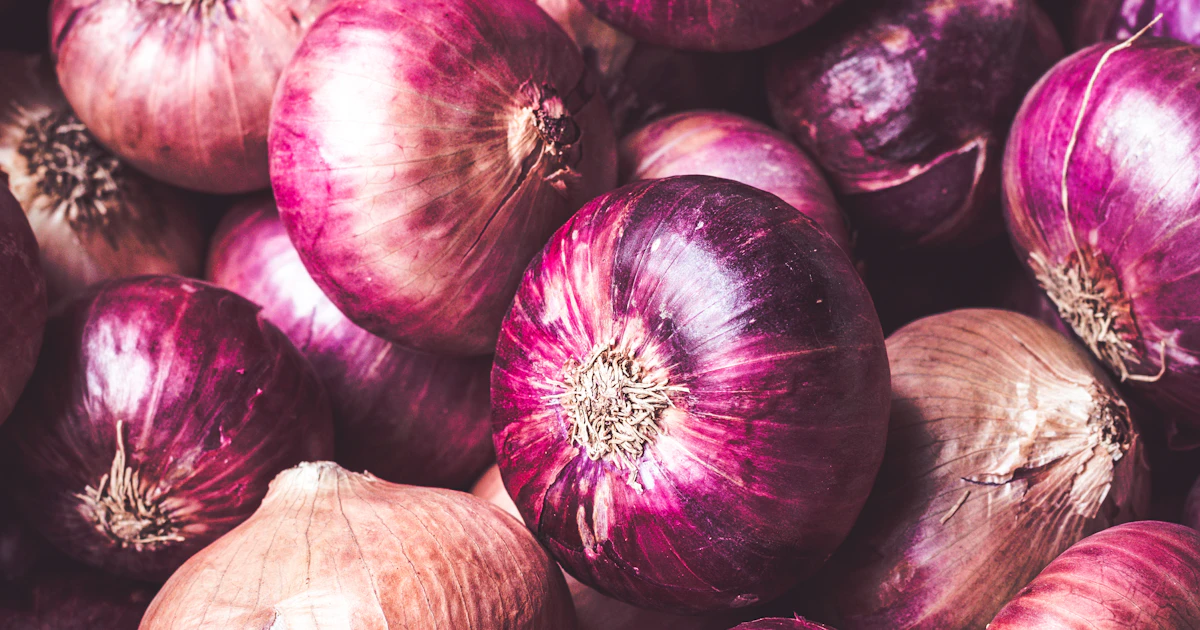
Photo by ABHISHEK HAJARE on Unsplash
Onions go into so many everyday dishes that a dog can swallow some without anyone noticing. They are toxic to dogs in every form, whether raw, cooked, dried or powdered, and they damage red blood cells.
Below we explain why onions are toxic, which forms are dangerous, how much is a problem and what to do if your dog ate some.
Quick answer: No. Onions are toxic to dogs in every form: raw, cooked, dried or powdered. They damage red blood cells and can cause anemia. If your dog ate onion, call your vet, the Pet Poison Helpline at 855-764-7661, or the ASPCA Animal Poison Control Center at 888-426-4435. Do not wait for symptoms, because anemia can take days to show. A consultation fee may apply to the hotlines.
On this page:
- Why onions are toxic to dogs
- Which forms of onion are dangerous?
- How much onion is too much?
- Signs of onion poisoning
- What to do if your dog ate onion
- Treatment and recovery
- How to keep onions away from your dog
- FAQ
Why onions are toxic to dogs
Onions and their relatives contain sulfur compounds called thiosulfates. In dogs, these compounds oxidize hemoglobin, the protein that carries oxygen in red blood cells. The damaged hemoglobin clumps into small structures called Heinz bodies, and the red blood cells are then destroyed faster than the body can replace them. The result is Heinz body hemolytic anemia: the blood can no longer carry enough oxygen.
The same family, the Allium genus, also includes garlic, leeks, shallots, chives and green onions. All of them should be kept away from dogs. Garlic is considered about five times more toxic than onion by weight, according to the AKC. See our full guide: can dogs eat garlic.
Which forms of onion are dangerous?
All of them. Cooking does not remove the toxic compounds, and dried or powdered onion is more concentrated than fresh onion.
Many poisonings are accidents involving leftovers. A dog that licks a plate or steals a bite of seasoned meat may swallow onion without anyone noticing.
| Form | Safe for dogs? | Note |
|---|---|---|
| Raw onion (white, yellow, red, sweet) | No | Toxic in all colors. |
| Cooked, fried or caramelized onion | No | Cooking does not make it safe. |
| Onion powder and dried flakes | No | More concentrated, so a small amount can matter more. |
| Green onions, scallions, leeks, shallots, chives | No | Same family, same risk. |
| Garlic and garlic powder | No | Considered about five times more toxic than onion by weight. |
| Food made with onion | No | Sauces, gravy, soup, stuffing, pizza, burgers and some baby food often contain it. |
How much onion is too much?
There is no safe amount. Veterinary sources often report poisoning in dogs that eat roughly 0.5% of their body weight in onion at once. For a 45 lb (20 kg) dog that is around 100 g, about one small to medium onion. Smaller amounts can still cause harm, especially when they are eaten repeatedly, because the damage can build up over time. Powdered onion is far more concentrated, so a small amount of seasoning can matter, particularly for a small dog.
Because of this, do not try to decide at home whether the amount was small enough to ignore. Call a vet or poison hotline with your dog’s weight, what was eaten, how much, and when.
Signs of onion poisoning
- Pale or whitish gums
- Lethargy and weakness
- Rapid breathing or a fast heart rate
- Yellow tint to the gums or eyes (jaundice)
- Dark or reddish-brown urine
- Vomiting, diarrhea, drooling or loss of appetite
Signs often do not appear straight away. The anemia may take several days to reach its worst point, so a dog that seems fine hours after eating onion is not necessarily safe. Tell your vet exactly when the exposure happened.
What to do if your dog ate onion
- Take away any remaining onion or food containing it.
- Call your vet or a poison hotline right away: Pet Poison Helpline 855-764-7661 or ASPCA 888-426-4435.
- Have the details ready: your dog’s weight, what was eaten (raw, cooked, powder, or a dish), the amount, and the time.
- Do not make your dog vomit at home unless a vet tells you to.
- Follow the vet’s instructions. They may ask you to come in even if your dog looks well.
- Go to an emergency clinic if you see pale gums, collapse, labored breathing or dark urine.
Treatment and recovery
Onion toxicity is diagnosed from the history of exposure, signs and blood work. Under a microscope, a blood smear can show Heinz bodies, and tests can show anemia. Because the anemia develops over several days, vets often repeat blood tests.
Treatment depends on how much was eaten and how soon you arrive. If the exposure was recent, a vet may remove what is left in the stomach and give measures to limit absorption. Dogs that become anemic may need fluids, oxygen and supportive care, and severe cases can need a blood transfusion. Many dogs recover well with prompt care, but severe anemia can be life-threatening, which is why early contact with a vet matters.
How to keep onions away from your dog
- Do not share table scraps, soups, sauces, stuffing or takeaway food without checking what is in them.
- Keep onions, garlic and seasoning blends in closed cupboards, and keep the kitchen bin covered.
- Check ingredient lists on baby food, broths and treats before sharing with a dog. Onion powder is a common ingredient.
- Keep onion peels and trimmings out of reach when cooking.
- Do not use garlic as a home remedy for fleas or worms. The amounts people use can approach a harmful level, and vets advise against it.
Looking for something safe and crunchy instead? Our guides to apples, bananas and watermelon cover treats most dogs can enjoy. For other common dangers, see grapes, chocolate and xylitol.
FAQ
Can dogs eat cooked onions?
No. Cooking, frying or baking does not remove the toxic compounds, so cooked onion is just as dangerous as raw.
Can dogs eat onion powder?
No. Onion powder is concentrated, which makes it more dangerous by weight than fresh onion. Avoid any seasoning blend or food that lists it.
Is one small piece of onion dangerous?
A tiny piece is less likely to cause trouble than a whole onion, but there is no proven safe amount, and repeated small exposures can add up. Call your vet for advice if your dog has eaten any.
How long does it take for onion poisoning to show?
Stomach upset may appear within hours, but anemia can take several days to develop and peak. Do not rely on your dog looking well in the first day.
Can dogs eat garlic, chives or leeks?
No. They belong to the same family and have the same effect on red blood cells. Garlic is considered about five times more toxic than onion by weight.
Can dogs recover from eating onions?
Many do, especially when the problem is caught early and treated. Severe anemia can be dangerous, so do not wait for symptoms before calling a vet.
Are puppies and small dogs at higher risk from onions?
Yes. The harmful dose depends on body weight, so a small amount of onion is a bigger dose for a puppy or a small dog. Call your vet if a small dog or puppy eats any real amount.
Can dogs eat onion rings?
No. Onion rings are still onion, and the batter and frying oil add fat and salt. If your dog ate one or more, call your vet for advice based on your dog’s size.
Are some breeds more sensitive to onions?
Veterinary references note that Japanese breeds such as the Akita and Shiba Inu are more sensitive to onion toxicity. No breed is safe from it, though, so keep onions away from every dog.
Bottom line
Do not feed your dog onions in any form, and treat any accidental exposure as a reason to call a vet, even if your dog looks fine. Early advice is the best protection against a problem that can build quietly over several days.
PawFoodCheck is not a veterinary service. This article is general information and does not replace advice from your own veterinarian. For a possible poisoning, call a vet or poison hotline immediately.
Related guides
- Can dogs eat peas?
- Can dogs eat mushrooms?
- Can dogs eat cabbage?
- Can dogs eat cauliflower?
- Can dogs eat chives?
- Can dogs eat leeks?
References
- PetMD, Can Dogs Eat Onions?
- WebVet, Can Dogs Eat Onions? (reviewed by the WebVet Veterinarian Team)
- American Kennel Club, Can Dogs Eat Garlic?
- ASPCA Pro, Onion Toxicity (veterinary technician article)