Can Dogs Eat Tuna? Mercury, Canned vs Raw & Safe Amounts (2026)
Last updated: November 25, 2026
Veterinary reviewed by Dr Zahid Iqbal, DVM, MRCVS and Dr Fatih Bozbay, Veterinarian.
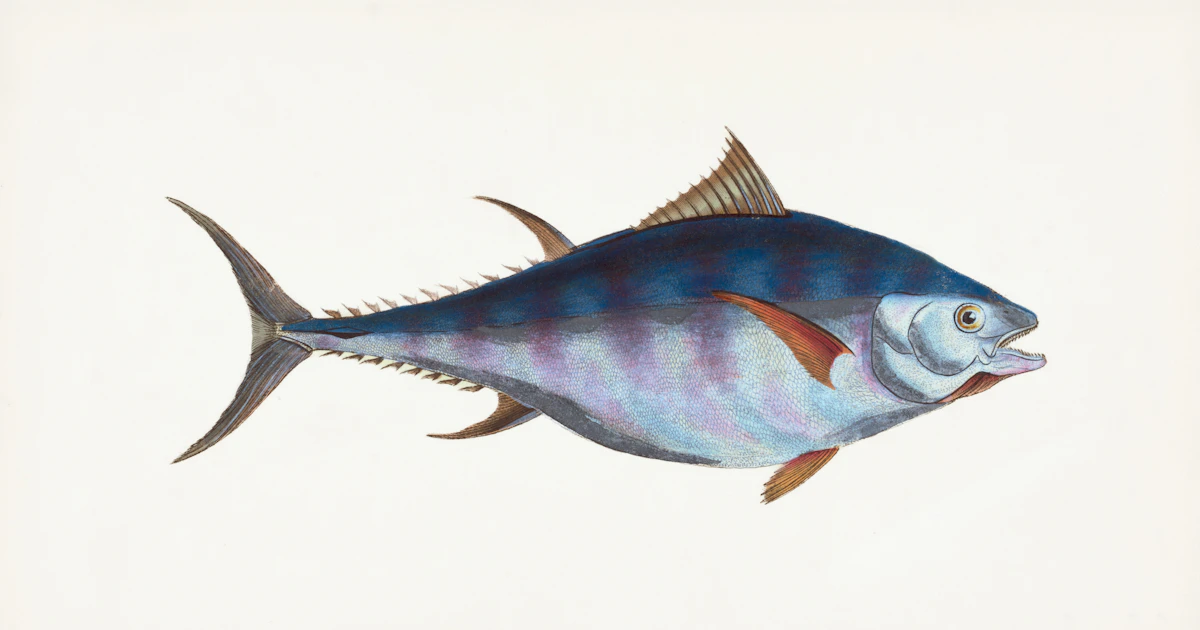
Photo by The New York Public Library on Unsplash
A tin of tuna in the cupboard is an easy thing to share, and many dogs would happily take the whole can. A small amount of plain canned light tuna packed in water is generally fine for a healthy adult dog, but only a little and only now and then, because tuna is high in mercury compared with many other fish.
This guide explains the mercury problem, how much is reasonable and how the different kinds of tuna compare.
Quick answer: Yes, but only a little and only now and then. A small amount of plain canned light tuna packed in water is generally fine for most healthy adult dogs. Tuna is high in mercury compared with many other fish, so it should be a rare treat, not a regular food. Avoid raw tuna, tuna in oil or brine, tuna salad and seasoned pouches.
On this page
- Is tuna safe for dogs?
- The mercury problem
- How much tuna can a dog have?
- Tuna types compared
- Better fish for dogs
- How to serve it
- FAQ
Is tuna safe for dogs?
Tuna is not toxic, and a small amount will not poison your dog the way grapes, onions or chocolate can. It is a lean source of protein and omega-3 fatty acids. The reasons to be careful are mercury, sodium and fat. Large, long-lived fish such as tuna build up more mercury in their bodies than smaller fish, and the American Kennel Club advises against making tuna a regular part of a dog’s diet.
Vets and dog-food sources do not fully agree on how much is fine, which is why the safest advice is small, plain and rare.
The mercury problem
Mercury is a heavy metal that enters the ocean and collects in fish. Eating too much of it over time can harm the nervous system and kidneys, in dogs as in people. The risk is from regular feeding, not from a single bite. FDA testing summarized by one pet site shows canned light tuna (usually skipjack) has roughly a third of the mercury of canned albacore, which is why light tuna is the better choice.
Small dogs and puppies are more at risk because the same amount of fish is a larger dose for their body weight. Several sources advise avoiding tuna for puppies altogether.
How much tuna can a dog have?
Treats should stay within about 10% of daily calories. Drained canned light tuna in water is roughly 116 kcal per 100 g, so the calorie ceiling is shown below. Mercury, not calories, is the real limit, so the practical amounts are much smaller than the ceiling, and they should be offered no more than once every week or two. These practical amounts are my own conservative estimates, not a vet standard.
For perspective, one source suggests a large dog could have up to a tin of tuna every two weeks. That is an upper limit to avoid, not a target, and your vet may advise less. Skip tuna entirely if your dog is a puppy, is pregnant, has kidney or neurological problems, or has a fish allergy.
| Dog weight | Calorie ceiling (drained light tuna) | Practical amount, occasionally |
|---|---|---|
| 5 lb | about 17 g | about 5 g (1 teaspoon) |
| 10 lb | about 30 g | about 10 g (2 teaspoons) |
| 20 lb | about 50 g | about 20 g (1 tablespoon) |
| 35 lb | about 76 g | about 30 g |
| 50 lb | about 100 g | about 40 g |
| 75 lb | about 136 g | about 55 g |
| 100 lb | about 168 g | about 70 g (about ¼ cup flaked) |
Tuna types compared
Garlic and onion are the hidden dangers in most prepared tuna dishes. Read more on garlic and onions.
| Type | Safe? | Notes |
|---|---|---|
| Canned light (skipjack) in water, drained, no added salt | Yes, rarely and in small amounts | Best option; lowest mercury |
| Canned albacore (white) in water | Better to avoid | About three times the mercury of light tuna |
| Tuna in oil | No | Extra fat; stomach upset and pancreatitis risk |
| Tuna in brine or salted water | No | Too much sodium |
| Flavored or seasoned tuna pouches | No | Often contain garlic, onion, spices |
| Tuna salad or tuna with mayo | No | Mayo is fatty; onion and garlic are toxic |
| Raw tuna or sushi | No | Parasites and bacteria; higher mercury |
| Fresh tuna steak, plain and fully cooked | Rare, small amounts | Mercury is higher than canned light |
| Bluefin, bigeye, yellowfin | Avoid | Larger species with more mercury |
Better fish for dogs
If you want to share fish regularly, smaller and shorter-lived fish carry less mercury. Cooked salmon and plain cooked shrimp are better choices, and sardines packed in water are often suggested too. Always cook fish fully, remove bones and skip seasoning. For a lean land protein, see chicken.
How to serve tuna to your dog
- Choose canned light tuna packed in water with no added salt. Skip tuna in oil or brine.
- Drain it well.
- Flake it with a fork and serve it plain, with no mayonnaise, onion or seasoning.
- Offer a small spoonful only occasionally, because tuna contains mercury.
The first time, give only one or two small pieces of tuna and watch for vomiting or loose stools over the next day before offering more.
FAQ
Can dogs eat canned tuna?
Yes, in small amounts, occasionally, if it is canned light tuna in water with no added salt or flavoring. Drain it first.
Can dogs eat tuna every day?
No. Daily tuna can lead to mercury buildup and adds sodium and fat. Keep it to a rare treat.
Can dogs eat albacore tuna?
It is better to choose light tuna instead, because albacore has higher mercury levels.
Is tuna bad for dogs?
Not in small, occasional amounts, but it is not a good everyday food. Mercury, salt and fat are the concerns.
What are the signs of mercury poisoning in dogs?
Long-term mercury exposure can cause weakness, tremors, trouble walking, vomiting or changes in behavior. These signs are rare from occasional tuna. Call your vet if you notice them or if your dog has been eating a lot of fish.
Can puppies eat tuna?
It is best to avoid tuna for puppies because of their small body size and the mercury risk.
Bottom line
A spoonful of plain canned light tuna in water now and then is unlikely to hurt a healthy adult dog. Because of mercury, make it rare, choose light tuna in water, avoid seasoned and oily products, and pick other fish if you want to share seafood more often.
I’m not a veterinarian. This article is general information and does not replace advice from your vet, especially for puppies, small dogs and dogs with kidney problems or allergies.
Related guides
- Can dogs eat turkey?
- Can dogs eat pork?
- Can dogs eat lamb?
- Can dogs eat sardines?
- Can dogs eat crab?
- Can dogs eat mayonnaise?
- Can dogs eat cod?
- Can dogs eat tilapia?
References
- American Kennel Club (AKC), can dogs eat tuna
- Webvet, can dogs eat tuna
- Purina, can dogs eat tuna
- Spot & Tango, can dogs eat tuna
- US FDA, mercury levels in commercial fish and shellfish
- USDA FoodData Central, canned tuna nutrient data
Quick reference: see our Dog Food Safety Chart for a one-page list of toxic and usually safe foods for dogs.