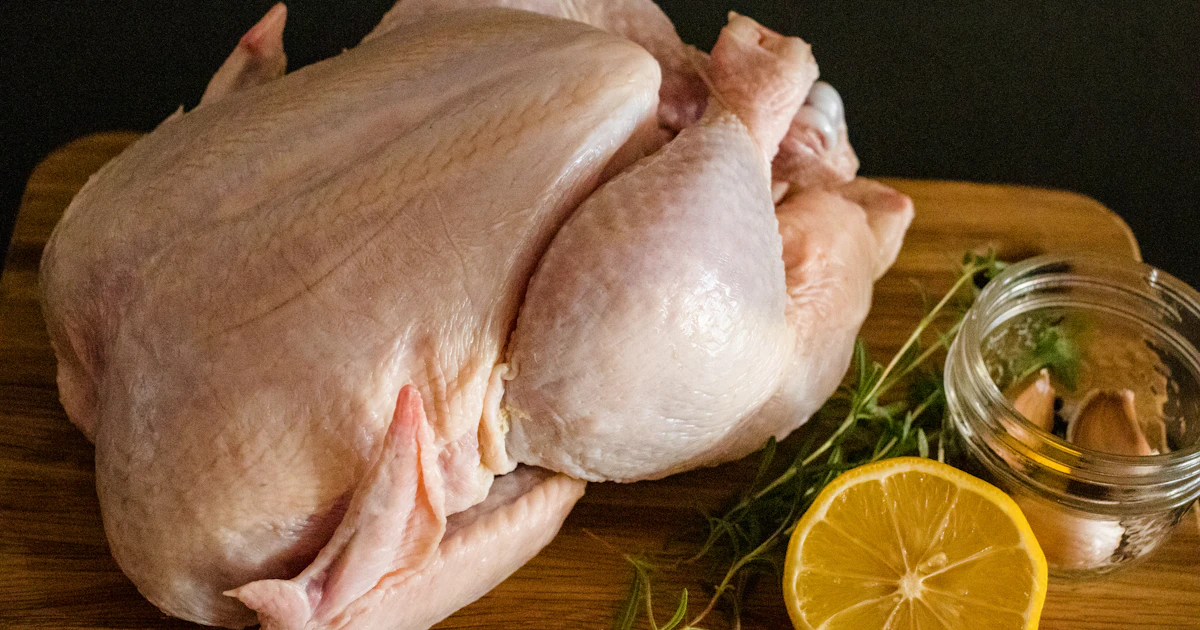
Can Cats Eat Raw Chicken? Salmonella Risk Explained
Last updated: November 25, 2026. Sources are listed at the bottom.
Veterinary reviewed by Dr Zahid Iqbal, DVM, MRCVS and Dr Fatih Bozbay, Veterinarian.
Photo by JK Sloan on Unsplash
Wild cats eat raw prey, so it seems natural to offer raw chicken. But raw supermarket chicken and homemade raw diets carry real risks, for the cat and for the people in the house.
If you are thinking about raw feeding, talk to your vet first.
Raw chicken can carry Salmonella, Campylobacter and other bacteria. Cooked, plain, boneless chicken is the safer way to share chicken.
What is the risk?
Cats.com says raw chicken can expose cats to harmful bacteria including E. coli, Salmonella and Campylobacter, and recommends sticking to a standard complete cat food. Kinship says raw chicken often contains pathogens such as Salmonella that can make both cats and humans sick, and that bones are also dangerous.
GoodRx quotes a vet that raw meat can harbor Salmonella, E. coli and Listeria, and says studies found about 25 percent of tested raw cat foods contained Salmonella or Listeria. It also reports that in January 2025 the FDA said over 12 cats got sick or died from bird flu after eating contaminated raw food.
Risk to people
Kinship says cats who eat raw chicken can shed Salmonella and other pathogens, and that leaving raw chicken in the bowl or on floors and counters can contaminate the environment. YourCat says Salmonella and Campylobacter infections in people are commonly linked to raw chicken, and that cats fed it will carry these pathogens in their mouths and shed them in feces.
What if my cat ate raw chicken?
Many cats are fine after a small amount, but watch for vomiting, diarrhea, fever and loss of appetite, which are signs of Salmonella in cats per Yahoo’s report on an FDA warning. Call your vet if you see them, if the cat is a kitten or has health problems, or if the chicken had bones. Wash your hands and surfaces well.
Safer options
Kinship notes that cooked chicken keeps the same nutrients as raw but in a safer form. See our chicken guide. If you still want to feed raw, FDA advice per Food Safety News is to cook raw meat and poultry to kill bacteria; if you choose otherwise, speak to your vet about safe handling.
Why raw chicken is a different question from cooked chicken
Plain cooked chicken and raw chicken are not the same food from a safety point of view. The meat itself offers the same protein either way, but raw poultry commonly carries bacteria such as Salmonella and Campylobacter. A cat may show no signs at all and still shed those germs in saliva and stool, which matters if you share a home with children, older adults or anyone with a weaker immune system.
The hidden risk: your kitchen, not just the bowl
Much of the danger sits in handling. Juices from a raw package can reach counters, sponges, the fridge shelf and the cat’s feeding mat. Freezing does not reliably solve this, because Salmonella can survive cold storage, and one small study reported contamination in a large share of chicken-based raw diets. If you ever do serve raw meat, wash hands, bowls and surfaces with hot soapy water straight afterwards and throw away leftovers within a short time.
Raw chicken parts people ask about
Raw organ meat such as liver is sometimes described as acceptable in small amounts, but only for chicken sold for pet or careful human use, never meat meant to be cooked first. Skin, fatty trimmings and bones add their own problems: extra fat, and splinters or blockages from bones. Cooking hearts and other parts is the more cautious route.
A safer way to share chicken with your cat
If your goal is to give a chicken treat, plain boiled or baked chicken with no seasoning, skin or bones is the safer choice. Keep treats to roughly ten percent of daily calories and let a complete cat food supply the rest. Sources do disagree on raw feeding: some owners and raw-diet groups support it when balanced carefully, while food-safety agencies advise against raw animal foods for pets. This guide takes the cautious side.
Do vets agree on raw chicken?
No. Some sources say cats can eat it and that it suits their biology, while others say it is safest to feed cooked chicken only. Nobody says it is poisonous, but the bacteria risk is real and the claimed benefits are not proven, which is why the cautious advice is to cook it or use a complete commercial product.
Flash-frozen and commercial raw foods
One source notes that flash-frozen chicken prepared specifically for raw feeding lowers the bacterial load, and another points out that commercial raw foods are formulated and tested to be complete. Homemade raw recipes are more likely to be unbalanced, so they should be planned with a vet or feline nutritionist.
Time out of the fridge
Do not leave raw chicken sitting out. Sources suggest throwing away uneaten raw chicken after about 30 minutes to two hours, and washing your hands, bowls and surfaces after every feeding.
Frequently asked questions
Can cats eat raw chicken from the store?
It is not recommended. Store chicken can carry Salmonella and Campylobacter. Cats can get sick from it, with vomiting, diarrhea, fever or loss of appetite.
Can cats eat raw chicken bones?
No. Bones can splinter or cause a blockage. See my cat ate a chicken bone.
Is commercial raw cat food safe?
Not risk-free. GoodRx cites studies finding Salmonella or Listeria in a portion of tested raw cat foods.
Can a kitten eat raw chicken?
Kittens have developing immune systems and tiny bodies, so they are the group where the bacteria risk matters most. Cooked, plain chicken in a very small portion is the more cautious option, and the main diet should be a complete kitten food.
Does freezing chicken make it safe for cats?
Not fully. Freezing slows bacteria but Salmonella can survive it, so frozen raw chicken should still be handled as a contamination risk.
Can cats eat raw chicken liver?
In moderation some sources say yes, but liver is very rich, and too much can cause an upset stomach or diarrhea.
Can cats eat raw chicken necks?
Some sources mention occasional raw necks for dental benefit, but any raw poultry carries bacteria, so it needs careful handling and a vet’s input.
Is a homemade raw chicken diet complete?
Usually not. Homemade raw recipes are more likely to be missing nutrients than a complete commercial food.
PawFoodCheck is not a veterinary service. This article is general information and does not replace advice from your own veterinarian.