Can Dogs Eat Carrots? Raw vs Cooked, Safe Amounts (2026)
Last updated: November 25, 2026
Veterinary reviewed by Dr Zahid Iqbal, DVM, MRCVS and Dr Fatih Bozbay, Veterinarian.
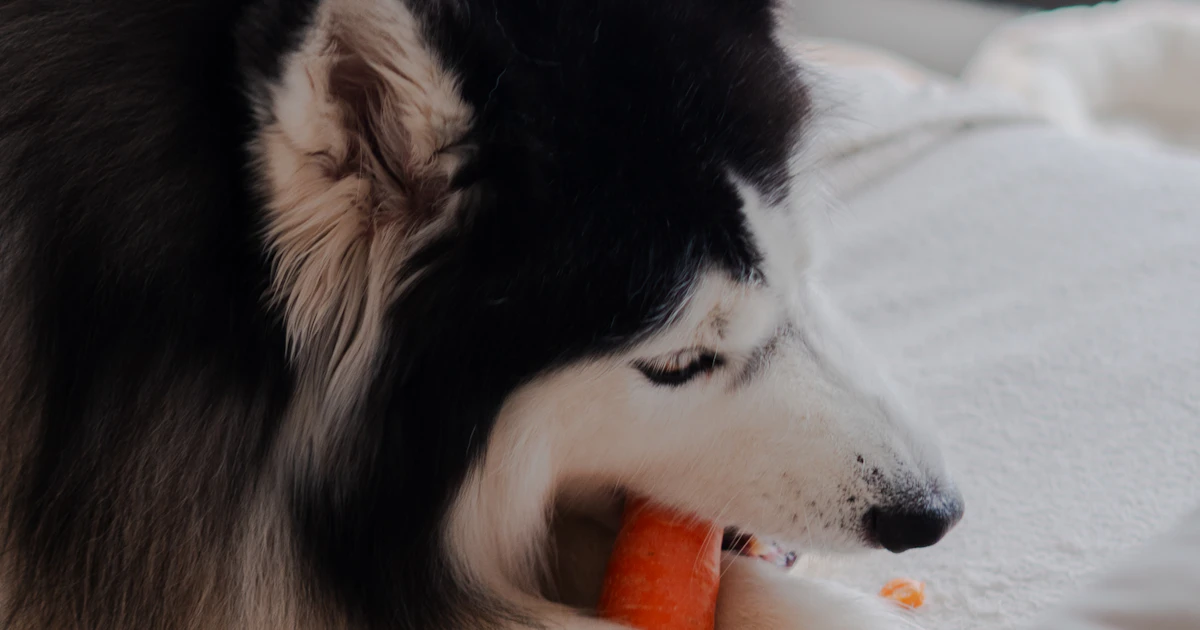
Photo by Rodrigo Rodrigues on Unsplash
Carrots are one of the easiest vegetables to share with a dog, and most dogs love the crunch. Raw or cooked, they are safe and low in calories, with a couple of preparation details worth getting right.
This guide covers why carrots suit most dogs and how to serve them safely.
Quick answer: Yes, dogs can eat carrots, raw or cooked. They are non-toxic, low in calories and most dogs enjoy the crunch. Wash them, serve them plain, and cut them into bite-size pieces because whole or large chunks can cause choking. A few baby carrots or slices a day is plenty for most dogs.
On this page:
- Are carrots good for dogs?
- How much carrot can a dog eat?
- Raw vs cooked carrots
- How to serve carrots safely
- Carrot foods to avoid
- Risks to know about
- FAQ
Are carrots good for dogs?
For most dogs, yes. Raw carrots have about 41 calories per 100 g, with roughly 2.8 g of fiber and 4.7 g of natural sugar (USDA). A medium carrot of about 61 g has around 25 calories. They are also a source of beta-carotene, which the body can turn into vitamin A.
The crunch of a raw carrot gives teeth a bit of a scrub, but it does not replace regular tooth brushing or dental care. As with any treat, carrots are an extra, not a replacement for a complete dog food.
How much carrot can a dog eat?
Treats should stay at or under about 10% of your dog’s daily calories. Carrots are low in calories, but they are not calorie-free, and the fiber can upset the stomach if the portion is too large. The table shows the most raw carrot that fits the treat budget when carrots are the only treat that day, using 0.41 calories per gram.
These are upper limits, not recommendations. Most dogs get far less: a typical serving is a few bite-size pieces, such as 1 to 2 baby carrots for a toy dog, and around 2 to 3 baby carrots a day for an average dog, according to common vet-reviewed guides. Chewy suggests 1 to 2 baby carrots or a quarter of a small carrot, two or three times a week, for the smallest dogs. Start small and increase slowly. If you give other treats that day, reduce the carrot.
The budget uses a standard estimate for a typical adult, neutered dog. Dogs that are overweight, senior or on a prescription diet may need a different number, so ask your vet.
| Dog weight | Treat budget per day (kcal, all treats) | Most raw carrot per day (all treats counted) |
|---|---|---|
| 5 lb | about 21 | 50 g (about ¾ of a medium carrot) |
| 10 lb | about 35 | 84 g (about 1½ medium carrots) |
| 20 lb | about 59 | 142 g (about 2 to 2½ medium carrots) |
| 35 lb | about 89 | 217 g (about 3½ medium carrots) |
| 50 lb | about 116 | 283 g (about 4½ medium carrots) |
| 75 lb | about 158 | 384 g (about 6 medium carrots) |
| 100 lb | about 196 | 477 g (about 8 medium carrots) |
Raw vs cooked carrots
Both are fine. Choose based on your dog’s age, teeth and digestion. Let cooked carrots cool before serving. Peeling is optional, but wash raw carrots well to remove dirt and residue.
| Raw | Cooked (steamed or boiled) | |
|---|---|---|
| Texture | Crunchy, good chew | Soft, easy to eat |
| Best for | Healthy adult dogs that chew well | Puppies, seniors and dogs with sensitive stomachs |
| Nutrition | Keeps all its fiber | Beta-carotene is easier for the body to use |
| Choking risk | Higher, so cut small or grate | Lower |
| Seasoning | None | None. No salt, butter, oil, onion or garlic |
How to serve carrots safely
- Cut them up. Slice into thin sticks or half-moons, or grate them for small dogs. Avoid round coins, which can lodge in the throat.
- Do not give a whole carrot to a small dog or a dog that gulps. A large dog that chews well may be given a bigger piece under supervision.
- Baby carrots count too. They are not small enough for tiny dogs, so cut them in half or quarters.
- Mix it in. Mash or puree cooked carrot and stir a spoonful into regular food, or stuff it into a toy.
- Carrot tops are safe, in small amounts. Wash them first.
Carrot foods to avoid
| Food | Why not |
|---|---|
| Glazed or buttered carrots | Sugar, butter and oil. |
| Carrots cooked with onion or garlic | Onion and garlic are toxic. See can dogs eat onions. |
| Carrot cake | Sugar and fat, and may contain raisins, which are toxic. See grapes and raisins. |
| Canned carrots in brine | Often salted. Fresh or plain frozen is better. |
| Carrot juice | Concentrated sugar with the fiber removed. |
Risks to know about
- Choking and blockage. This is the main risk. Large or whole pieces can lodge in the throat or, if swallowed, in the gut.
- Stomach upset. Too many carrots, or a sudden start, can cause gas, soft stool or diarrhea.
- Sugar. Carrots contain natural sugar. Check with your vet if your dog is diabetic or overweight.
- Allergy. Rare, but stop and call your vet if you see itching or vomiting.
More crunchy options: cucumbers, apples and blueberries.
FAQ
Can dogs eat raw carrots?
Yes. Wash them and cut them into small, bite-size pieces. Raw carrots are a popular crunchy treat.
Can dogs eat cooked carrots?
Yes. Plain steamed or boiled carrots are soft and easy to digest. Do not add salt, butter, oil, onion or garlic.
Can dogs eat baby carrots?
Yes, but cut them for small dogs. Whole baby carrots can be a choking hazard for tiny dogs and for dogs that gulp food.
Can dogs eat carrots every day?
Many dogs can have a small amount most days if the portion fits within their treat budget and their stool stays normal.
Can puppies eat carrots?
Yes, in tiny pieces. Cooked and mashed or finely grated carrot is the safest way to start, and a puppy’s stomach may need time to adjust.
Are carrots good for a dog’s teeth?
The chewing action gives a modest scrubbing effect, but carrots do not replace tooth brushing or vet dental care.
Bottom line
Plain carrots are a safe, low-calorie treat for most dogs. Wash them, cut them small to prevent choking, skip anything glazed or seasoned, and keep portions modest.
PawFoodCheck is not a veterinary service. This article is general information and does not replace advice from your own veterinarian, who knows your dog’s health history.
Related guides
- Can dogs eat cabbage?
- Can dogs eat cauliflower?
- Can dogs eat peas?
- Can dogs eat lettuce?
- Can dogs eat zucchini?
- Can dogs eat bell peppers?
- Can dogs eat beets?
- Can dogs eat radishes?
References
- USDA FoodData Central, carrots, raw
- Chewy, Can Dogs Eat Carrots?
- PetMD, Can Dogs Eat Carrots?
- WebVet, Can Dogs Eat Carrots? (reviewed by the WebVet Veterinarian Team)
- Petful, Can Dogs Eat Carrots?
- American Kennel Club: Can Dogs Eat Carrots? (raw and cooked carrots, benefits)