Signs of Poisoning in Cats: Symptoms and What to Do Now
Do not try to make your cat vomit. Take the product, plant or packaging with you. ASPCA: (888) 426-4435. Pet Poison Helpline: (855) 764-7661. Fees may apply.
Last updated: November 14, 2026. Sources are listed at the bottom.
Veterinary reviewed by Dr Zahid Iqbal, DVM, MRCVS and Dr Fatih Bozbay, Veterinarian.
Photo by Werzk Luuuuuuu on Unsplash
Cats hide illness well, and the signs of poisoning depend on the poison, the amount, how it got into the body and your cat’s health. That makes quick action more useful than trying to diagnose it yourself.
This page lists the most common warning signs. It is general information, not veterinary advice.
Common signs of poisoning in cats
Pet Poison Helpline and Cats.com list diarrhea, vomiting, fever and seizures among common signs. Other commonly listed signs are:
- Drooling
- Loss of appetite
- Lethargy, weakness or a wobbly, “drunk” walk
- Tremors, twitching or seizures
- Difficulty breathing
- Excessive thirst or urination (Alley Cat Allies)
- Collapse or being unresponsive
International Cat Care groups signs by body system: stomach and gut (vomiting, diarrhea), nervous system (tremors, incoordination, seizures, depression, coma), breathing (coughing, sneezing, difficulty breathing) and skin.
Signs can be sudden, delayed or subtle
Cats Protection says signs often appear suddenly, but Cats.com points out that mild cases may show no signs at all, and TheCatSite notes slow poisoning can look like other illnesses. If you know your cat was exposed, do not wait for symptoms.
Signs linked to specific poisons
- Human painkillers (paracetamol/acetaminophen): difficulty breathing, pale or blue gums, swelling of the face or paws, later vomiting and dark urine (Cats Protection).
- Lilies: see our lily guide. These plants are dangerous even in small amounts.
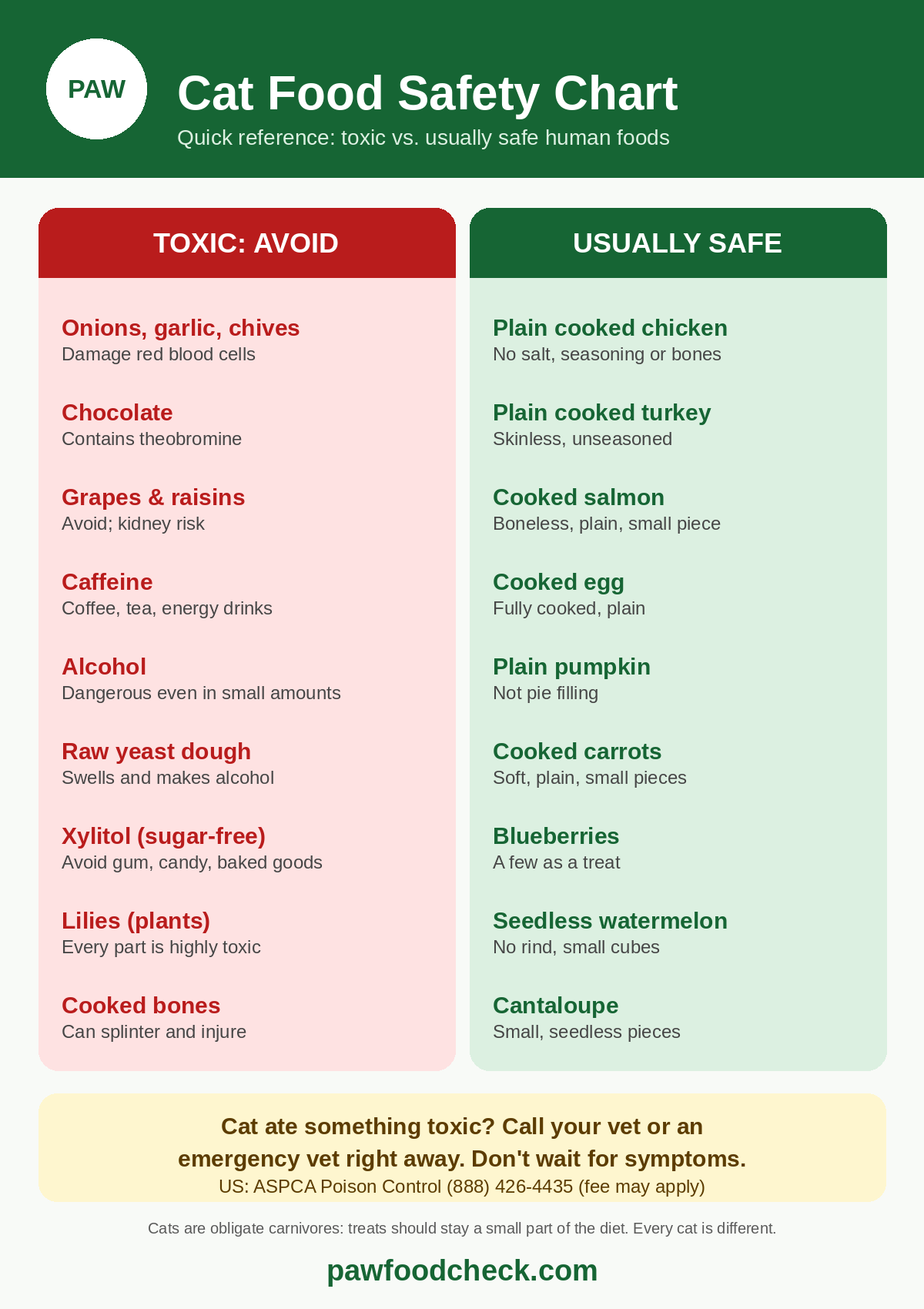
- Chocolate, onion, garlic, grapes: see our toxic foods list.
What to do right now
- Move your cat away from the source and stay calm.
- Call your vet, an emergency clinic or a poison line straight away.
- Do not induce vomiting. Pet Poison Helpline warns never to attempt it, and Cats.com notes some substances, such as bleach, can burn the esophagus if brought back up.
- Take the product, plant or packaging, and note what, how much and when.
- Cats groom themselves, so if a toxin is on the fur or paws, mention that to the vet. Do not try home washing methods without advice.
How to prevent poisoning
- Keep human foods, medicines, cleaners and antifreeze out of reach.
- Never give human painkillers.
- Check plants before bringing them home.
- Keep cats indoors until garden sprays have dried (International Cat Care).
Signs grouped by body system
Poisons rarely look the same. Stomach and gut signs include drooling, vomiting, diarrhea and loss of appetite. Nervous system signs include tremors, twitching, wobbly walking, restlessness and seizures. Blood and organ signs include pale or yellow gums and jaundice, while kidney problems can show up as increased thirst and urination. A racing heart, fast breathing or collapse point to more serious poisoning.
Why signs can seem to come and go
Some poisons act fast, and others are slow. With lilies and antifreeze, the early stomach signs can fade before the kidneys start to fail over the next day or two, which is why a cat that looks better is not necessarily safe. Timing, dose, the cat’s size and health all change what you see.
Why cats are at higher risk
Cats groom constantly, so poison on the coat can be swallowed later. They are small, so a little goes a long way, and their livers handle some drugs and chemicals poorly. Common household sources include lilies, antifreeze, human medications like ibuprofen, essential oils and some insecticides.
Look-alike problems
Vomiting and drooling also happen with ordinary stomach upset, dental pain or other illness. The signs alone cannot prove poisoning, which is why a known exposure and the product label matter so much.
Poisoning through fur and grooming
Pet Poison Helpline notes that the most common way cats are poisoned is by licking chemicals off their fur, and another common route is eating a rodent or other animal that has itself been poisoned. That is why a cat that never raids the trash can still be exposed.
Why hydrogen peroxide is not a home fix
A pet hospital group warns that hydrogen peroxide should never be used to make a cat vomit, because even small amounts can injure the mouth, throat and stomach and can complicate proper treatment. Do not try to induce vomiting at home.
Information worth gathering
If you know what the cat was exposed to, keep the packaging, plant or product with you, since it can help with diagnosis. Note roughly how much, when it happened, and what signs you have noticed.
Frequently asked questions
Can a cat recover from poisoning on its own?
Do not count on it. Early treatment can be life-saving, so call a vet even if your cat looks fine.
How long do poisoning signs take to appear?
It varies from minutes to days depending on the poison.
Is poison control free?
Not always. Fees may apply, and numbers should be checked on the official sites.
What is the difference between food poisoning and toxic poisoning?
Food poisoning usually means infection from spoiled or contaminated food. See our food poisoning guide.
Can poisoning in cats look like a cold or tummy bug?
Yes. Early drooling, vomiting and low appetite overlap with many illnesses, so the context of what the cat may have touched is important.
Should I make my cat vomit?
Poison helplines advise against inducing vomiting at home, and some substances can burn the throat on the way back up.
Can a cat be poisoned by licking its own fur?
Yes. Because cats groom constantly, chemicals on the coat are swallowed, and this is described as a leading cause of poisoning.
Do several sick cats at once suggest poison?
It can. Sudden similar signs in two or more cats in the same home is one situation where poisoning should be considered.
Are dog flea products dangerous for cats?
Yes. Cats are very sensitive to pyrethrins and pyrethroids, which are found in some flea products, and exposure can be life-threatening.
Related guides
References
- Pet Poison Helpline: My Cat Ate Something Toxic
- Cats Protection: Poisoning in Cats
- International Cat Care: Poisoning
- Cats.com: Poisoning in Cats
- ASPCA Animal Poison Control
- PetMD: Poisons in cats
- Pet Poison Helpline: Symptoms of poisoning
- Alley Cat Allies: Poisoning in cats
- Cats.com: Poisoning in cats
- VCA: Toxic Household Hazards for Cats
- Pet Poison Helpline: Clinical Signs of Poisoning in Cats
- Cats.com: Signs of Poisoning in Cats
Quick reference: see our Cat Food Safety Chart for a one-page list of toxic and usually safe foods for cats.