Are Lilies Toxic to Cats? Signs and What to Do
Last updated: November 25, 2026. Sources are listed at the bottom.
Veterinary reviewed by Dr Zahid Iqbal, DVM, MRCVS and Dr Fatih Bozbay, Veterinarian.
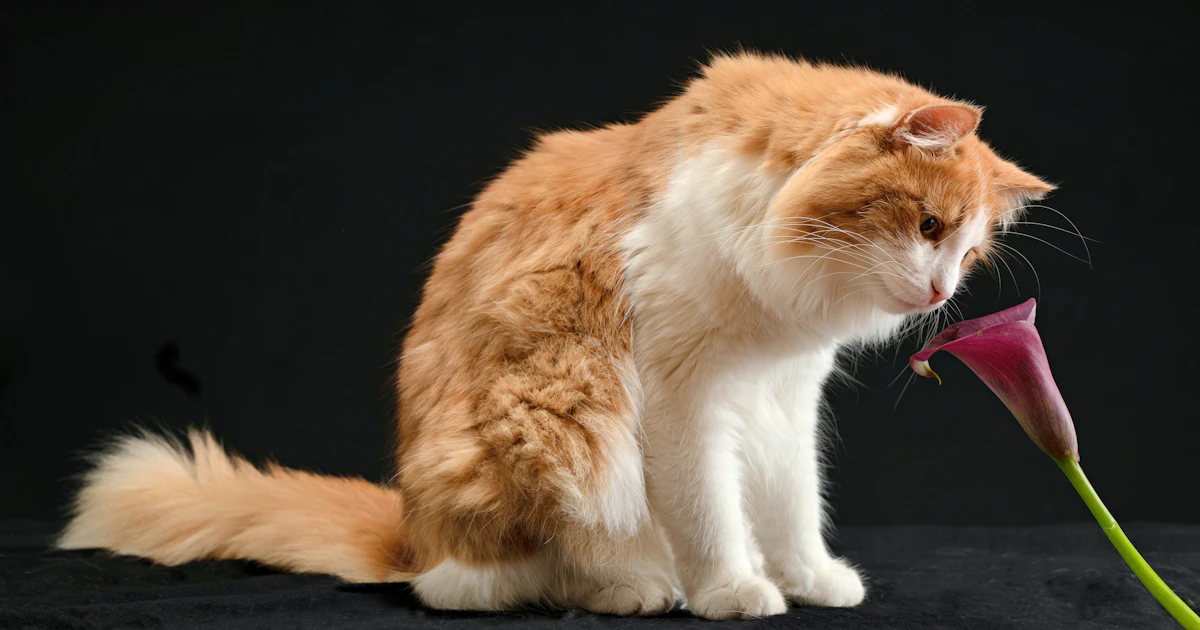
Photo by Ingo W. Dühring on Unsplash
Lilies are one of the most dangerous plants for cats. PetMD says true lilies (Lilium species) and daylilies (Hemerocallis species) can both cause kidney failure in cats.
Because bouquets are common gifts, many poisonings happen at home. This guide explains which lilies matter and what to do.
Short answer: yes, true lilies are extremely dangerous.
If your cat touched, licked or ate any part of a lily, call your vet or an emergency clinic immediately. Do not wait for symptoms. ASPCA Animal Poison Control: (888) 426-4435.
Why are lilies so dangerous for cats?
PetMD notes the exact toxin has not been identified, but any part of the plant can cause sudden kidney failure and other serious problems. Even small amounts of petals, leaves, pollen, or the water in the vase can be dangerous.
Which lilies are toxic to cats?
- True lilies such as Easter, Asiatic, stargazer and tiger lilies: most dangerous, can cause kidney failure.
- Daylilies: also can cause kidney failure.
- Peace lily and calla lily: PetMD says they are not true lilies and do not cause kidney failure, but they can still irritate the mouth and stomach. Gloriosa (flame) lily is a different danger because it contains colchicine.
Signs of lily poisoning in cats
Signs can include vomiting, drooling, lethargy and loss of appetite. PetMD says signs can begin within two hours, and fatal kidney failure can develop in less than 72 hours. Later signs include changes in urination and dehydration.
What to do right now
- Remove your cat from the plant and wipe pollen off its fur if you can do so safely.
- Call your vet or an emergency clinic immediately, even if your cat seems fine.
- Tell them what part of the plant, and roughly how much.
There is no antidote. Treatment is early and may include IV fluids and monitoring of kidney values. Cats that are treated quickly tend to have a good outlook, according to PDSA.
How to keep your cat safe
PetMD advises keeping lilies out of the home and yard entirely if you have a cat. When buying bouquets, ask the florist to leave out lilies.
Which plants count as dangerous lilies
The name lily covers very different plants. The ones that cause sudden kidney failure in cats are true lilies (the Lilium group, such as Easter, tiger, Asiatic and stargazer lilies) and daylilies (Hemerocallis). Peace lilies and calla lilies are not true lilies and do not cause kidney failure, but their oxalate crystals can cause mouth pain and drooling. Other plants with lily in the name, such as lily of the valley and gloriosa or flame lily, carry different toxins that affect the heart or multiple organs.
Why pollen and vase water matter
With most poisonings a cat has to eat the plant. Lilies are unusual because veterinary sources describe cats getting sick from a nibble of a petal or leaf, from grooming pollen off their fur, or from drinking vase water. The exact toxin has not been identified, and dogs do not develop the same kidney failure, which is why this is a cat-specific warning. Some cats also seem more susceptible than others, so there is no safe amount to test.
Bouquets, gifts and gardens
Cut flowers are where most households meet the risk. Bouquets from supermarkets and florists often include lilies without making that obvious, and a fallen petal or a few grains of pollen on a table is enough to count. If you receive flowers, check every stem, and if lilies are in the mix, the simplest rule is to keep the whole arrangement out of the house. Garden daylilies carry the same warning.
Cat-friendlier flowers to choose instead
If you enjoy fresh flowers, roses, sunflowers, snapdragons and orchids are commonly listed as non-toxic to cats by the ASPCA. Even safe flowers can cause an upset stomach if chewed, so place vases out of reach and check any plant against the ASPCA list before bringing it home.
Pollen-free lilies are not a safe loophole
Some lilies are sold as pollen-free, but veterinary sources say this does not make them safe for cats. The leaves, petals, stems and vase water can still carry the problem, so the advice stays the same: no true lilies or daylilies in a home with a cat.
Is it only a cat problem?
Pet Poison Helpline notes that dogs may get minor stomach upset from these lilies but do not appear to develop kidney failure the way cats do. That is why the same bouquet can be harmless to a dog and dangerous to a cat.
Names can be confusing
Many plants are called lilies and several are called fire lily, including true lilies and unrelated plants. If you cannot identify a plant for certain, treat it as dangerous and ask a garden center or horticulturist to identify it.
Frequently asked questions
Are lilies toxic to cats if they only smell them?
Smelling alone is not the concern; contact with pollen, leaves, petals or vase water is. Even licking pollen off fur can be dangerous, so treat any contact as urgent.
Are peace lilies toxic to cats?
They are not true lilies and do not cause kidney failure, but they can cause drooling and vomiting. Call your vet if your cat chewed one.
How fast does lily poisoning work?
Signs may start within hours, and kidney failure can develop within 24 to 72 hours without treatment.
Can cats recover from lily poisoning?
Prompt treatment greatly improves the outlook, but some cats are left with long-term kidney damage.
Is lily pollen dangerous if my cat only walks past it?
Pollen falling onto fur and being licked off later is a recognized route of exposure, so even a brush against a bloom counts. Keeping lilies out of the home removes the problem.
Are peace lilies and calla lilies deadly to cats?
They do not cause the kidney failure seen with true lilies and daylilies, but their oxalates irritate the mouth, so they are still better kept out of reach.
Are dogs affected by lilies?
Dogs may get mild stomach upset from true lilies but do not seem to develop kidney failure. Lily of the valley, however, can harm both.
Is lily of the valley dangerous to cats?
Yes. It contains cardiac glycosides that can affect the heart and is a different problem from kidney failure.
Are Peruvian lilies (alstroemeria) safe?
They are not true lilies and are expected to cause only mild, self-limiting stomach upset, but it is still best to keep cats away.
PawFoodCheck is not a veterinary service. This article is general information and does not replace advice from your own veterinarian.
Related guides
References
- PetMD: Lily Poisoning in Cats
- RSPCA Australia: Are lilies toxic to cats?
- Catster: Are Lilies Toxic to Cats?
- Purdue Veterinary Medicine: Lilies and cats
- UC Davis: Lilies deadly to cats
- PetMD: Lily poisoning in cats
- Preventive Vet: Lily toxicity
- Pet Poison Helpline: Lilies
- VCA: Plants That Are Toxic to Cats
- Catster: My Cat Ate a Lily
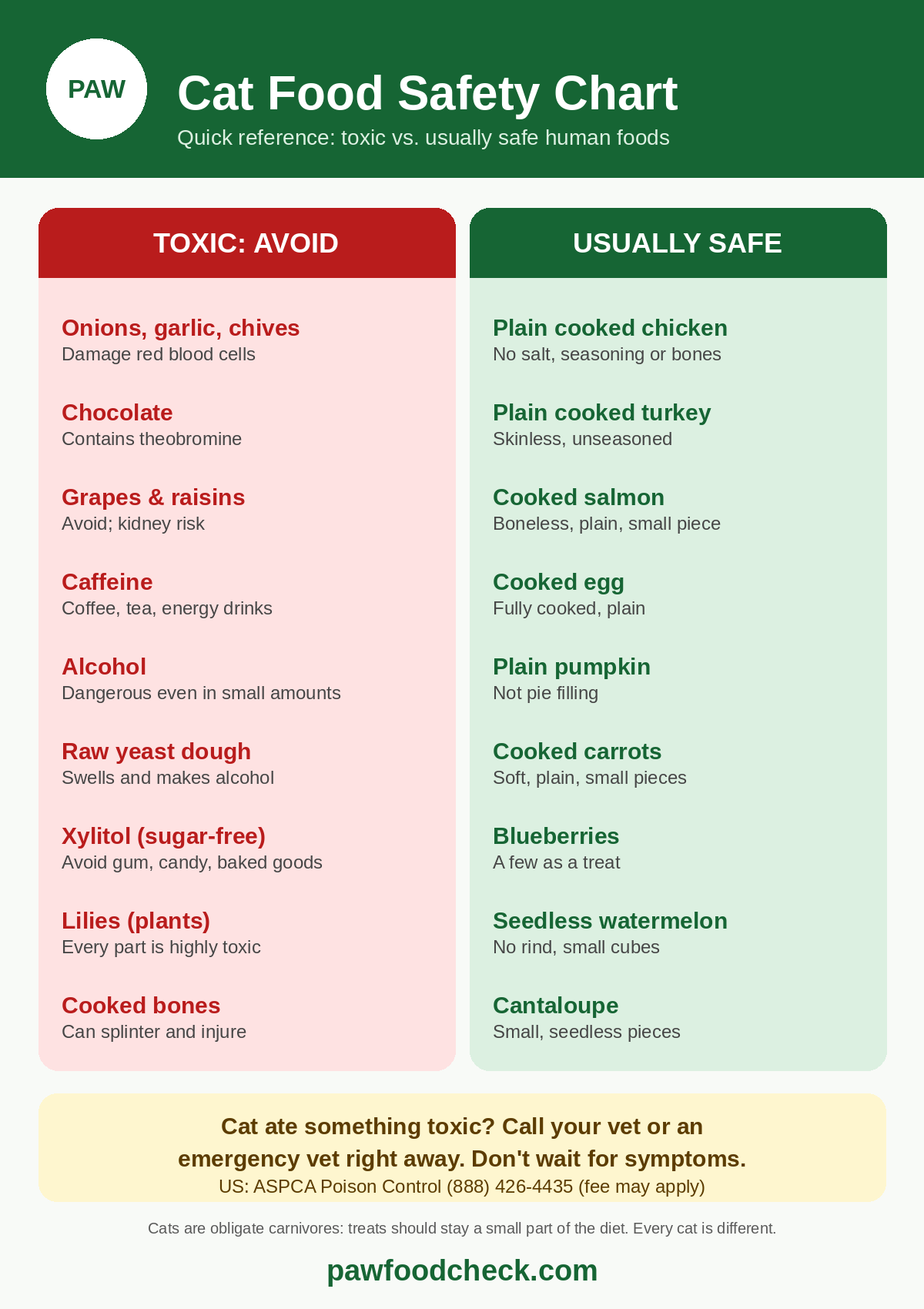
Quick reference: see our Cat Food Safety Chart for a one-page list of toxic and usually safe foods for cats.