Can Dogs Eat Rice? White vs Brown, Amounts & Upset Stomach (2026)
Last updated: November 25, 2026
Veterinary reviewed by Dr Zahid Iqbal, DVM, MRCVS and Dr Fatih Bozbay, Veterinarian.
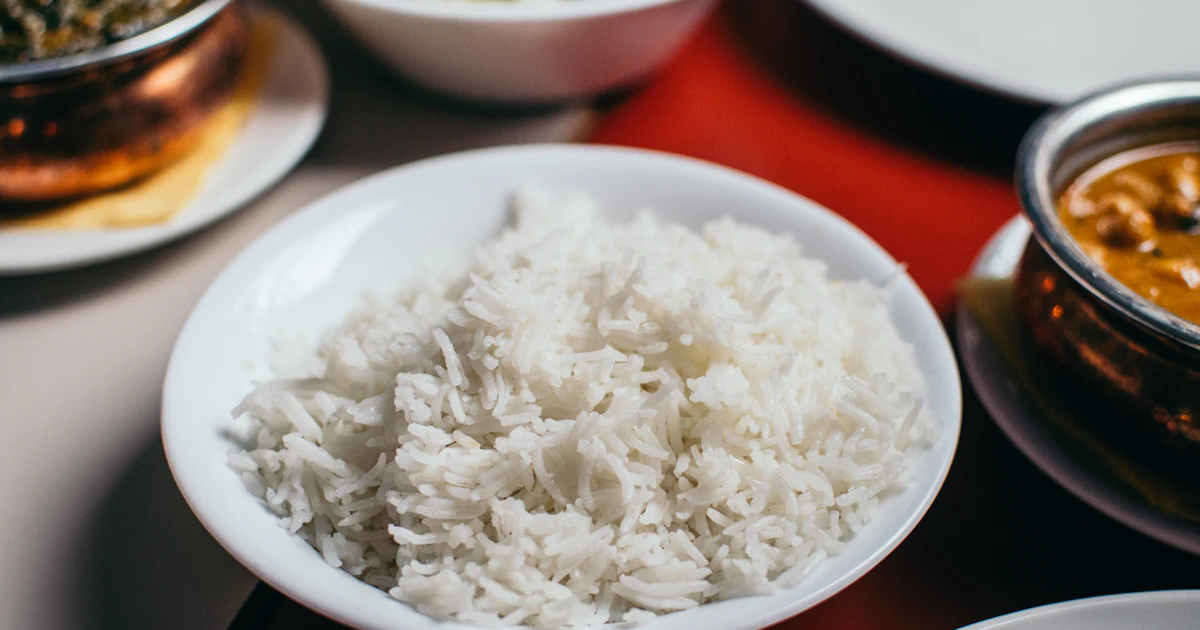
Photo by Pille R. Priske on Unsplash
If your dog has an upset stomach, there is a good chance a vet or a friend has told you to try plain rice. It is also the grain most likely to fall off your plate at dinner. For most dogs, plain cooked rice is a safe, gentle food, but the type of rice, the way it is cooked and the amount all matter.
This guide covers white versus brown rice, how much fits into a day, how to make chicken and rice for a mild upset, and the rice dishes that can make a dog sick.
Quick answer: Yes, dogs can eat rice. Plain, fully cooked rice with no salt, butter or seasoning is safe and easy on the stomach. White rice is the usual choice for a dog with a mild upset stomach, and brown rice suits healthy dogs. Rice is mostly starch and has plenty of calories, so keep it to a few spoonfuls as a topper, not a full meal.
On this page:
- Is rice good for dogs?
- White rice vs brown rice
- How much rice can a dog eat?
- Chicken and rice for an upset stomach
- Rice dishes to avoid
- Risks to know about
- How to serve it
- FAQ
Is rice good for dogs?
Rice is a common ingredient in dog foods, and plain cooked rice is a safe carbohydrate for most dogs. It is bland, low in fat and easy to digest, which is why vets often suggest it when a dog has a mild stomach upset. It is not a complete food, and it does not need to be added to a healthy dog’s diet for health reasons.
The main downside is calories. Cooked white rice has about 130 calories per 100 g and cooked brown rice about 123 (USDA). Fed in large portions at every meal, rice can lead to weight gain and nutritional gaps over time.
White rice vs brown rice
Use white rice when the goal is to give the gut as little work as possible, and brown rice for a healthy dog that digests it well. Other plain, fully cooked rice such as jasmine or basmati is also fine in moderation.
| White rice | Brown rice | |
|---|---|---|
| Calories (cooked, per 100 g) | about 130 | about 123 |
| Fiber (cooked, per 100 g) | about 0.4 g | about 1.6 g |
| Best for | Dogs with a mild upset stomach or diarrhea | Healthy dogs as an occasional side |
| Digestibility | Easier to digest | Harder to digest because of the bran |
| Storage | Keeps well in the fridge for a day or two | Spoils faster once cooked, so refrigerate promptly |
How much rice can a dog eat?
As a side or topper, rice should fit inside your dog’s treat budget of about 10% of daily calories. The table uses that method with cooked white rice at 1.3 calories per gram. One level tablespoon of cooked rice weighs roughly 10 g.
These amounts assume rice is the only treat that day, and they are for a typical adult, neutered dog. Dogs that are overweight, senior, diabetic or on a prescribed diet may need different amounts, so check with your vet. Brown rice is a little lighter per gram, so the same weight fits comfortably.
Note: these amounts are for rice as an extra. If your vet has told you to feed a bland diet, they will give you the meal portions, which are different.
| Dog weight | Treat budget per day (kcal, all treats) | Most cooked white rice per day (all treats counted) |
|---|---|---|
| 5 lb | about 21 | 15 g (about 1½ tablespoons) |
| 10 lb | about 35 | 26 g (about 2½ tablespoons) |
| 20 lb | about 59 | 45 g (about 4½ tablespoons) |
| 35 lb | about 89 | 68 g (about 7 tablespoons) |
| 50 lb | about 116 | 89 g (about 9 tablespoons) |
| 75 lb | about 158 | 121 g (about ¾ cup) |
| 100 lb | about 196 | 150 g (about 1 cup, slightly under) |
Chicken and rice for an upset stomach
Plain boiled chicken and white rice is the classic short-term bland diet. The rice provides gentle starch, and the chicken gives protein without the fat that can irritate an unsettled gut. The AKC describes the chicken-and-rice mix as using more rice than chicken, around two parts rice to one part chicken.
- Boil skinless, boneless chicken in plain water with no salt, oil or seasoning, then shred it.
- Cook white rice in plain water until soft.
- Mix about two parts rice to one part chicken and let it cool.
- Feed small portions often, rather than one large meal.
- Return to normal food gradually once the stool improves.
Rice can calm a mild, passing upset, but it cannot treat an infection, a blockage or a serious illness. Call your vet if vomiting or diarrhea lasts more than a day or two, if your dog is a puppy, a senior or very small, or if there is blood, weakness, a swollen belly or refusal to drink.
Rice dishes to avoid
| Dish | Why not |
|---|---|
| Fried rice | Oil, salt, soy sauce and often onion or garlic. See can dogs eat onions. |
| Rice with butter, salt, spices or sauce | Extra fat and salt can upset the stomach. |
| Curries, biryani and pulao | Spices, oil, and often onion and garlic. |
| Rice pudding or sweet rice | High in sugar and fat. Some versions contain raisins, which are toxic. See grapes and raisins. |
| Uncooked rice | Hard to digest. Always cook rice fully. |
Risks to know about
- Weight gain. Rice is calorie-dense for its volume, so large portions add up.
- Blood sugar. White rice has a higher glycemic index than brown. AKC says diabetic dogs can have a little white rice if needed, but not regularly. Ask your vet first.
- Unbalanced diet. Too much rice can crowd out the nutrients in a complete dog food.
- Allergy. Rare, but stop and call your vet if you see itching, vomiting or diarrhea after rice.
How to serve rice to your dog
- Use plain white or brown rice.
- Cook it fully in water with no salt, butter, oil or seasoning.
- Let it cool to room temperature.
- Offer a spoonful or two mixed into the regular meal.
The first time, give only one or two small pieces of rice and watch for vomiting or loose stools over the next day before offering more.
FAQ
Can dogs eat rice every day?
A small spoonful can be fine for a healthy dog, but rice should not replace a balanced dog food. Keep it within the table above.
Can dogs eat brown rice?
Yes. It has more fiber than white rice, which suits healthy dogs, but it is harder to digest and not the best choice when your dog has an upset stomach.
Can dogs eat rice and chicken every day?
Not long term. A chicken-and-rice meal is meant for a few days during a stomach upset. It is not balanced as a permanent diet, so ask your vet if you want to cook for your dog regularly.
Can puppies eat rice?
Yes, plain cooked rice in small amounts is fine. If a puppy has vomiting or diarrhea, call your vet rather than treating it at home for long.
Can dogs eat basmati or jasmine rice?
Yes, if it is plain, fully cooked and served in small amounts. They are similar to white rice in calories.
Is rice bad for dogs with diabetes?
White rice raises blood sugar more than brown rice. Ask your vet before feeding any rice to a diabetic dog.
Bottom line
Plain cooked rice is a safe, gentle food for most dogs. Choose white rice for an upset stomach and brown for healthy dogs, keep portions small, and skip fried rice, curries and anything with onion, garlic, salt or butter.
PawFoodCheck is not a veterinary service. This article is general information and does not replace advice from your own veterinarian, who knows your dog’s health history.
Related guides
- Can dogs eat oats?
- Can dogs eat pasta?
- Can dogs eat bread?
- Can dogs eat lamb?
- Can dogs eat quinoa?
- Can dogs eat black beans?
References
- USDA FoodData Central, rice, white and brown, long-grain, cooked
- American Kennel Club, Can Dogs Eat Rice?
- PetMD, Can Dogs Eat Rice?
- WebVet, Can Dogs Eat Rice? (reviewed by the WebVet Veterinarian Team)
- Purina, Can Dogs Eat Brown Rice?