Can Dogs Eat Honey? Safe Amounts, Raw Honey & Risks (2026)
Last updated: November 25, 2026
Veterinary reviewed by Dr Zahid Iqbal, DVM, MRCVS and Dr Fatih Bozbay, Veterinarian.
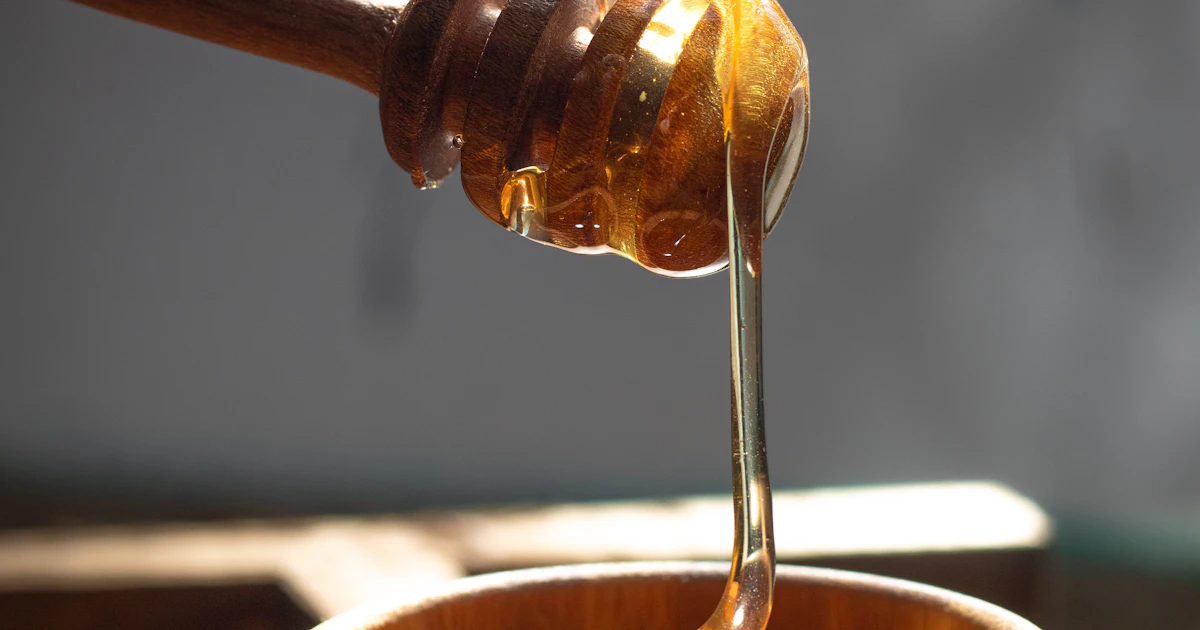
Photo by With Mahdy on Unsplash
Honey is often described as a natural remedy, so it is no surprise that owners wonder about sharing a spoonful. Most healthy adult dogs can have a small amount of plain honey now and then. It is not toxic, but it is almost pure sugar, so a lick or a teaspoon is the most to offer.
Below you will find whether honey really helps dogs, the risks, which dogs should skip it and how much honey a dog can eat.
Quick answer: Yes, most healthy adult dogs can have a small amount of plain honey now and then. It is not toxic, but it is almost pure sugar, so keep it to a lick or a teaspoon at most. Skip honey for puppies, dogs with diabetes, overweight dogs and dogs with weak immune systems, and check with your vet first.
On this page
- Can dogs have honey?
- Does honey really help dogs?
- Risks to know
- How much honey can a dog eat?
- Honey types and products compared
- FAQ
Can dogs have honey?
Yes, in tiny amounts. The American Kennel Club and other pet sources say honey is generally safe for dogs as an occasional treat. It is not poisonous, and it contains small amounts of vitamins and antioxidants. But it is about 304 kcal per 100 g according to USDA data, and almost all of that is sugar. One teaspoon is roughly 20 kcal, which is already a large share of the daily treat budget of a small dog.
Does honey really help dogs?
You may see claims that honey soothes a cough or helps with allergies. The evidence for dogs is thin. A small amount may soothe a mild sore throat, but honey does not treat kennel cough, infections or allergies. A cough that lasts more than a day or two needs a vet. Likewise, the idea that local honey cures pollen allergies in dogs is not supported by good research.
Risks to know
- Sugar and weight gain: Honey adds calories without nutrition your dog needs.
- Diabetes and obesity: Honey can worsen blood sugar control and weight problems.
- Dental problems: Sticky sugar can feed bacteria and contribute to plaque and tooth decay.
- Botulism spores: Raw honey can carry Clostridium botulinum spores. Adult dogs are rarely affected, but puppies and dogs with weak immune systems are more at risk, so it is safest to avoid raw honey for them.
- Stomach upset: Too much can cause diarrhea or vomiting.
- Hidden xylitol: Some honey-flavored or sugar-free products contain xylitol, which is toxic. See is xylitol toxic to dogs.
How much honey can a dog eat?
There is no official vet standard for honey. These numbers are my own conservative estimates for plain honey, offered no more than once or twice a week for a healthy adult dog.
If your dog is a puppy, diabetic, overweight or has a health condition, skip honey unless your vet says it is okay.
| Dog weight | Practical amount, occasionally |
|---|---|
| Under 10 lb (4.5 kg) | A tiny lick, up to 1/4 teaspoon |
| 10 to 25 lb (4.5 to 11 kg) | Up to 1/2 teaspoon |
| 25 to 50 lb (11 to 23 kg) | Up to 1 teaspoon |
| 50 to 100 lb (23 to 45 kg) | 1 to 2 teaspoons |
| Over 100 lb (45 kg) | Up to 1 tablespoon |
Honey types and products compared
If you want a sweet treat that comes with fiber and vitamins, try fruit instead, such as bananas, apples or blueberries. Many dogs also love peanut butter, as long as it is xylitol-free.
| Type | Safe? | Notes |
|---|---|---|
| Plain pasteurized honey | Yes, in tiny amounts | The lower-risk option |
| Raw honey | Small amounts for healthy adults only | Avoid for puppies and weak immune systems |
| Manuka honey | Same rules as other honey | Not proven to be better; costs more |
| Honey-roasted nuts or snacks | No | Salt, sugar and often other ingredients |
| Honey with xylitol or sugar-free syrups | No | Xylitol is toxic to dogs |
| Honey cereals, cakes and sweets | No | Sugar, fat and sometimes chocolate or raisins |
| Honeycomb | Avoid | Wax is hard to digest and can block the gut |
Raw honey and botulism spores
Raw, unpasteurized honey can contain spores of Clostridium botulinum, the bacterium behind botulism. PetMD advises against giving raw honey to puppies under about a year old, because their immune systems are still developing, and to dogs with weakened immune systems, such as those on chemotherapy. Its botulism guide adds that in healthy adult dogs the spores usually pass through the gut without causing illness, while puppies, senior dogs and dogs with compromised immunity can be affected. Hepper also says to avoid raw honey for a dog that has recently had surgery.
Does honey help dog allergies? What the evidence says
A common claim is that local raw honey eases seasonal allergies. The American Kennel Club says the scientific evidence is lacking. It may help only if a dog is allergic to a pollen that is actually in the honey, and the AKC says it is not guaranteed or even likely to help. Hepper also notes that the AKC treats the health benefits of honey for dogs as anecdotal. A small amount is unlikely to hurt a healthy dog, but it should not replace a vet-guided allergy plan.
Honey for diabetic and overweight dogs
Honey is mostly sugar. The AKC says it should not be given to diabetic dogs, and VCA Animal Hospitals lists honey among the sugary people foods to avoid in the diet of a dog with diabetes. Hepper recommends skipping it for dogs that struggle with weight or dental problems. If your dog has any of these conditions, ask your vet before offering honey.
Manuka honey and wounds
Manuka honey is higher in antimicrobial compounds than most honey, and PetMD notes it has been used to help with wound care. That is a medical use, not a treat. A wound should be looked at by your vet before you put anything on it, and a dog that licks the area will swallow the honey anyway.
How to serve honey safely
Keep it to a tiny taste, count it as part of the daily treat allowance, and introduce it slowly. PetMD says all treats together should stay under 10 percent of a dog’s daily calories. Honey is very sticky, and Hepper warns that a dog that eats it too quickly can choke, so offer it on a spoon or a lick mat rather than in a big dollop. One source cites a limit of about one teaspoon a day for a dog, but the AKC suggests asking your vet how much is right for your dog, especially for small breeds.
FAQ
Can dogs eat honey?
Yes, a small amount of plain honey is generally safe for healthy adult dogs. Keep it occasional.
Can puppies have honey?
It is best to avoid it. Raw honey may carry botulism spores, and puppies are more vulnerable than adult dogs.
Can dogs have honey for a cough?
A small amount may soothe a mild sore throat, but honey is not a treatment. Call your vet if the cough lasts more than a day or two or comes with other signs.
Can diabetic dogs eat honey?
No, not without your vet’s approval. The sugar can disrupt blood sugar control.
Is honey better than sugar for dogs?
Not really. Both are sugar. Honey has tiny amounts of nutrients, but a dog does not need either.
Can dogs eat honey nut cereal or honey buns?
It is better to avoid them. They contain sugar, fat and other ingredients that do not suit dogs.
Is honey toxic to dogs?
No. PetMD says honey is not toxic to dogs, but too much can raise blood sugar and add weight.
Can dogs eat honey every day?
The AKC says there is little reason to add honey to a dog’s diet regularly because of its sugar and calories. Think of it as an occasional extra.
Can honey cause botulism in dogs?
In healthy adult dogs it is unlikely. PetMD says the spores in honey often pass through without causing illness, but puppies, senior dogs and dogs with weak immune systems can get botulism from honey.
Can dogs eat raw honey after surgery?
Hepper advises against raw honey for a dog that has recently had surgery, because of the botulism spore risk.
Bottom line
A small taste of plain honey will not hurt most healthy adult dogs, but it is not a health food. Keep it rare and tiny, skip it for puppies and dogs with diabetes or weight problems, and never use honey products that contain xylitol.
I’m not a veterinarian. This article is general information and does not replace advice from your vet, especially for puppies and dogs with diabetes or a weak immune system.
Related guides
- Can dogs eat grilled cheese?
- Can dogs eat olives?
- Can dogs eat pistachios?
- Can dogs eat walnuts?
- Can dogs eat marshmallows?
- Can dogs eat mustard?
References
- American Kennel Club (AKC), can dogs eat honey
- PetMD, can dogs eat honey
- Chewy, can dogs eat honey
- Webvet, can dogs eat honey
- USDA FoodData Central, honey nutrient data
- PetMD, Can Dogs Eat Honey? (raw honey, puppies, calories)
- PetMD, Botulism in Dogs (honey spores)
- American Kennel Club, Can Dogs Eat Honey? (allergy claims, diabetic dogs)
- VCA Animal Hospitals, Nutrition and pancreatic disease in dogs (sugars in diabetes)
Quick reference: see our Dog Food Safety Chart for a one-page list of toxic and usually safe foods for dogs.